Contact us:
Address:
- Vitebsk region, Glubokoe District, Prazaroki, Aptechnaya street, 2
The Church of the Assumption of the Blessed Virgin Mary in Prazaroki is a significant architectural landmark of the neo-Romanesque style, distinguished by its rich history and architectural forms.
History
The history of this magnificent church dates back to ancient times — the first Catholic church was built here as early as 1698. Eventually, a Franciscan monastery was established nearby, and the church became part of the monastery. In 1721, after a fire, a new stone church was erected, and in 1797, the Franciscan monastery was restored. However, during the Polish uprising of 1830, the monastery in Prazaroki was dissolved, and the church became a parish church.
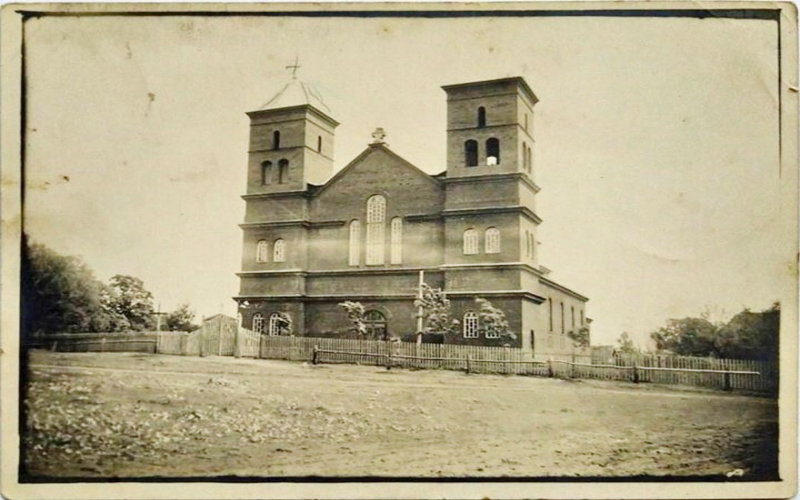
The beautiful neo-Romanesque church that we see today was constructed between 1899 and 1907 on the site of the previous one, destroyed by fire in 1892. It faithfully served the Catholic community until 1950 when it was closed and converted into a grain warehouse.
However, in 1989, the church was returned to the Catholics, and the process of its restoration began, culminating in 1990 when the church was re-consecrated.
About the Church
Architecturally, the church is a three-nave basilica with a pentagonal apse and two square towers topped with hip roofs.
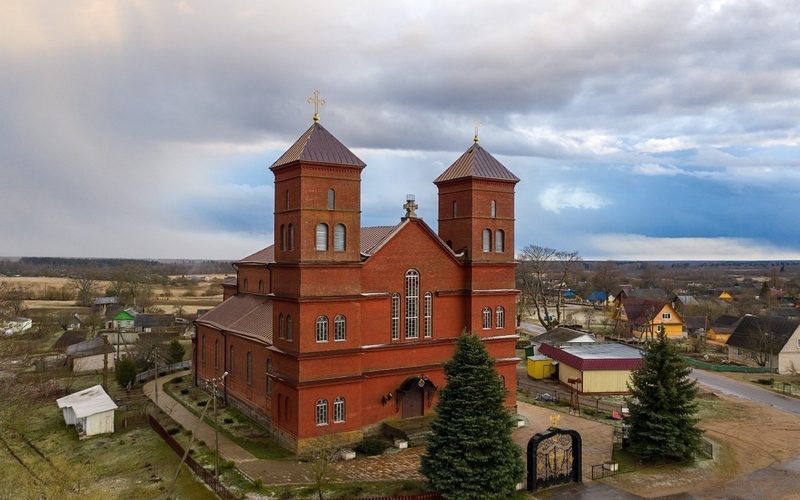
Its majestic forms and intricate details attract the attention of tourists and pilgrims, making it one of the region's important cultural heritage sites.
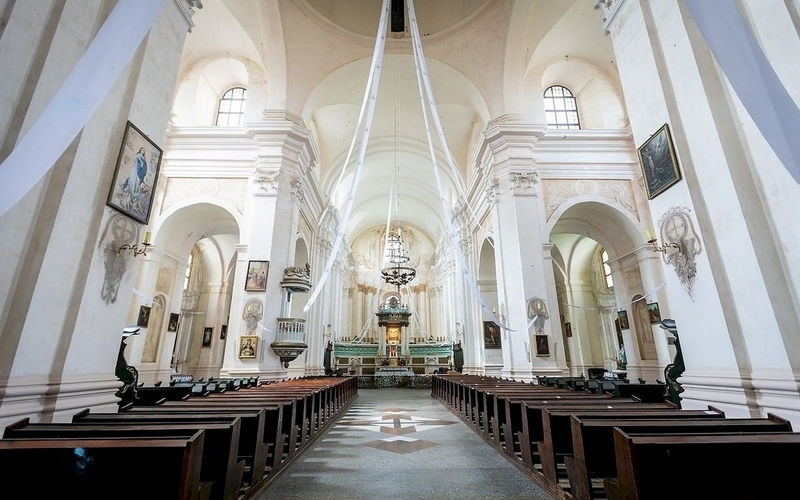
The Church of the Assumption of the Blessed Virgin Mary in Prazaroki has become not only a place of prayer but also a symbol of Belarusian history and cultural heritage, attracting visitors from around the world.