Address:
- Minsk, Musical Lane, 5
In the very heart of old Minsk, at 5 Muzychny Lane, stands a building shrouded in legends and mysteries. The House of Masons of the 18th century is one of the most enigmatic architectural monuments of the Belarusian capital. Its history intertwines facts with urban legends, and today it houses the State Museum of the History of Theatre and Musical Culture of Belarus.
History of Origin
The late 18th and early 19th centuries in Minsk marked the emergence of stone construction. Before that, the Bernardine Lane area, where the House of Masons is located, was dominated by wooden houses. In 1810, the project for a new building was approved for nobleman Trojan Klyuchynski. The design is attributed to provincial architect Mikhail Chakhovsky.
Built in the classical style, the house became one of the first three-story stone buildings in Minsk. Initially, it was residential: part of the premises was occupied by the owners, while the rest was rented out to wealthy citizens. In the mid-19th century, the family of painter Cheslav Moniuszko, father of the future composer Stanislaw Moniuszko, lived in one of the apartments.

The Masonic Trace
The name “House of Masons” is linked to the theory that in the early 19th century, the building hosted meetings of a Masonic lodge. Historians mention different names for the lodge – “Northern Torch” or “Red Torch.” Although there is no documentary proof, it is known that Klyuchynski’s son-in-law, Hilary Yakubovsky, was indeed a member of the Minsk lodge that operated between 1816 and 1822.
The architectural features of the building also fuel the legend. It is believed that the symmetrical projections of the facades formed a pattern resembling a Masonic cross, while the unique layout reinforced the sense of mystery.
Even without solid evidence, the myth of the “house of the Freemasons” firmly took root in the memory of Minsk residents and tourists, giving the building an aura of enigma.

Architecture
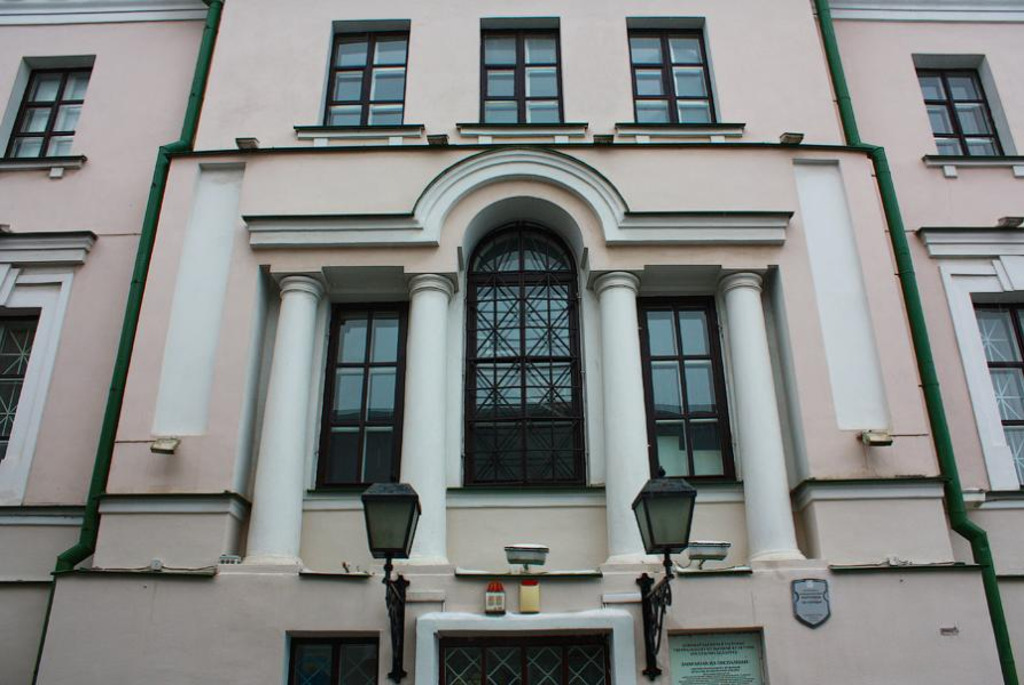
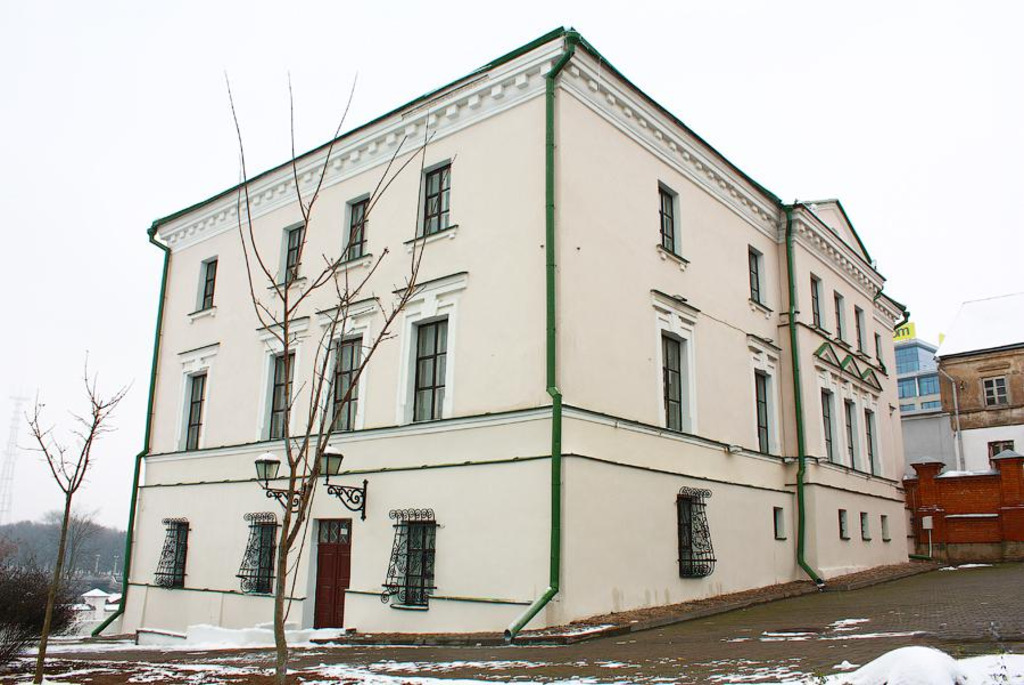
The House of Masons was built in the classical style: rectangular in plan, with a symmetrical composition and a hipped roof. On three sides, the facades are adorned with risalits topped with triangular pediments. In the tympanums of the pediments, one can see semicircular windows, while above the main entrance stand Doric columns.
The first floor is highlighted by a decorative cornice and moldings, while the second-floor windows are framed with casings, keystones, and pediments. Despite internal reconstructions, the external appearance of the house has remained almost unchanged, offering a vivid example of Minsk’s 19th-century architecture.
From Tenement House to Communal Living
In the 19th century, the house changed hands several times. It was owned by the Zimnitsky and Nedvetsky families and later by other landlords and tenants. In the mid-19th century, the building even housed a Jewish school.
After nationalization in the 1920s, the house was used as residential space and gradually turned into a communal apartment building. Large apartments were divided into rooms, and nameplates appeared by the doors. Even in this state, the building retained its status as a unique architectural monument.
A Museum within Ancient Walls
By the end of the 20th century, the communal apartments were vacated, and the building suffered a fire. After restoration, completed in 2001, the State Museum of the History of Theatre and Musical Culture of Belarus moved into the house.
Today, the museum holds a collection of more than 40,000 exhibits: from vintage posters and costumes to musical instruments, photographs, and archival documents. Exhibitions, concerts, and cultural evenings are regularly held here. One of the permanent displays is dedicated to the building itself, its architecture, and its legends.
The House of Masons in Excursions
The House of Masons is included in popular sightseeing routes through the Upper Town. Tourists come here to see a rare monument of classicism, touch the mysterious history of Freemasonry, and explore the theatrical culture of Belarus.
Thanks to its central location in Minsk, close to the Trinity Suburb and other landmarks, visiting the museum can easily be combined with a walk through the old town.
Why You Should Visit
The House of Masons of the 18th century is not just an architectural landmark. It is a place where history intertwines with myths, and legends come alive within walls that preserve the memory of past centuries.
Here you can:
- see one of the oldest stone houses in Minsk;
- learn more about the mysterious world of Freemasons;
- visit the museum’s exhibitions and experience Belarusian cultural heritage;
- feel the unique atmosphere of the Upper Town.
The House of Masons is an opportunity to discover unknown pages of Minsk’s history and experience the city’s special charm, where legend and reality exist side by side.