Date :
Tuesday, October 31, 2023
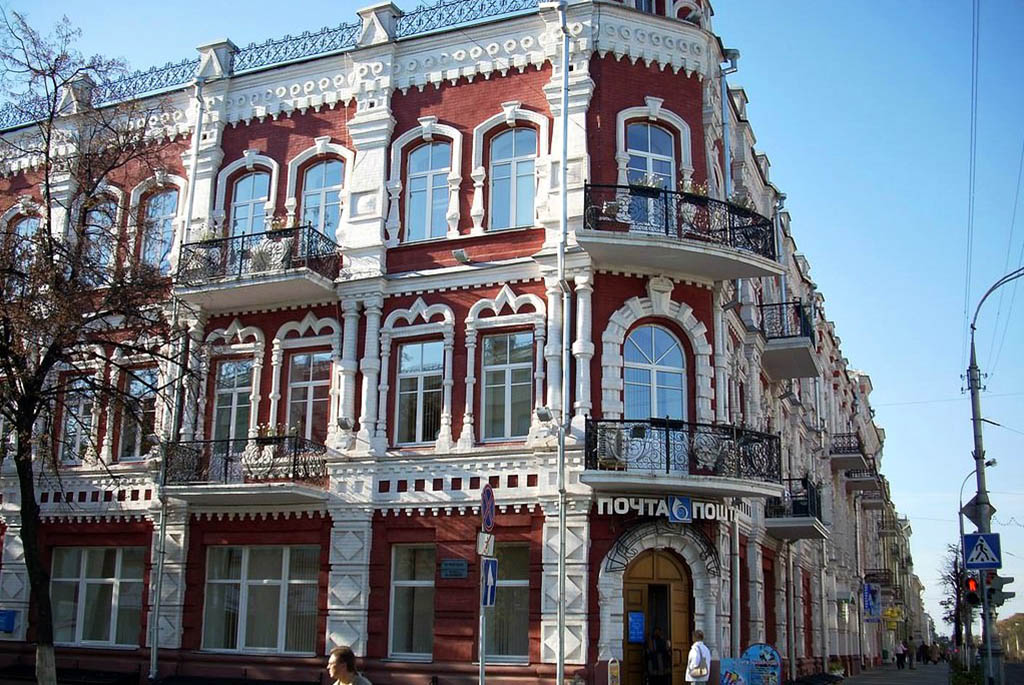
The Merchant Leyba Mayants' revenue house is one of those architectural landmarks that shape the distinctive appearance of Gomel.
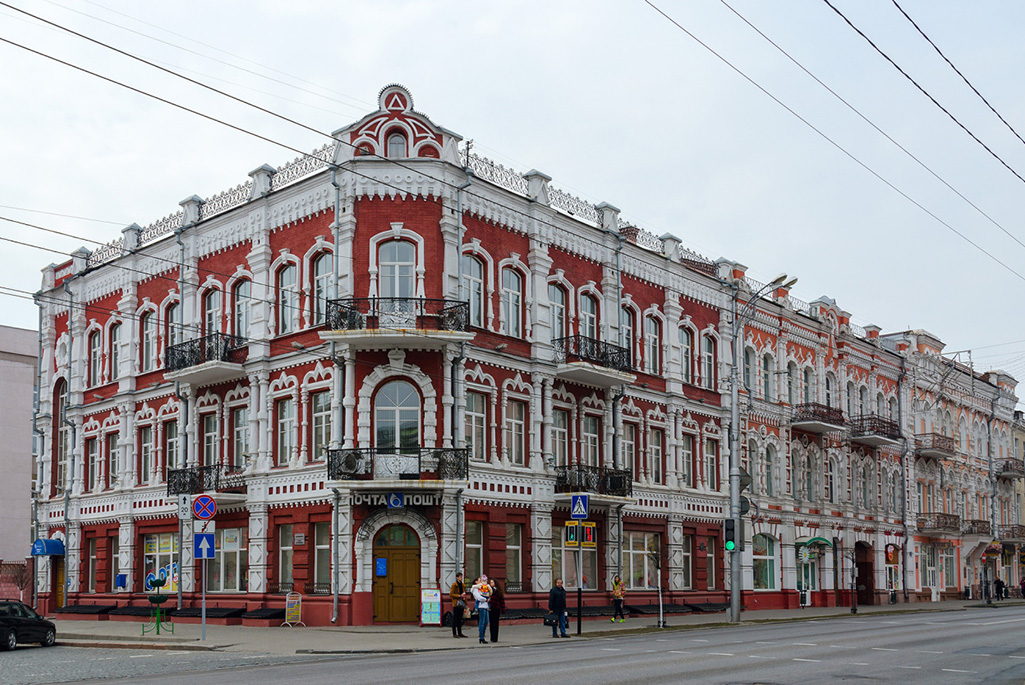
It is located in the city center, at the corner of Sovetskaya and Kommunarov streets (formerly Rumyantsevskaya and Myasnitskaya). The building was constructed in 1894 in the Art Nouveau style. It still impresses with its unique design and vibrant exterior decoration in white and brick tones. The building's facades are adorned with wrought iron balconies and plaster details in a pseudo-Russian style. The three-story building fully conveys the spirit of the pre-revolutionary era and corresponds to the architectural techniques and stylistic trends of that time.
By the end of the 19th century, a significant number of Jews lived in Gomel. They owned shops, craft workshops, small enterprises, and revenue houses - residential buildings intended for renting apartments. Thanks to the abolition of serfdom and the active construction of railways in Gomel, favorable conditions for the development of entrepreneurship emerged. Revenue houses owned by Jewish merchants became true monuments of Belarusian pre-revolutionary architecture. At that time, buildings were rarely numbered, but more often were named after the owner. In Gomel, there were houses of Yakov Lavyanov, David Zakhariev, and Leyba Mayants.
In Leyba Mayants' revenue house, rental apartments occupied the third floor. The second hosted pedagogical courses, while the first floor housed a pharmacy, a law firm, a locksmith's workshop, shops, including a wine store owned by the entrepreneur himself.
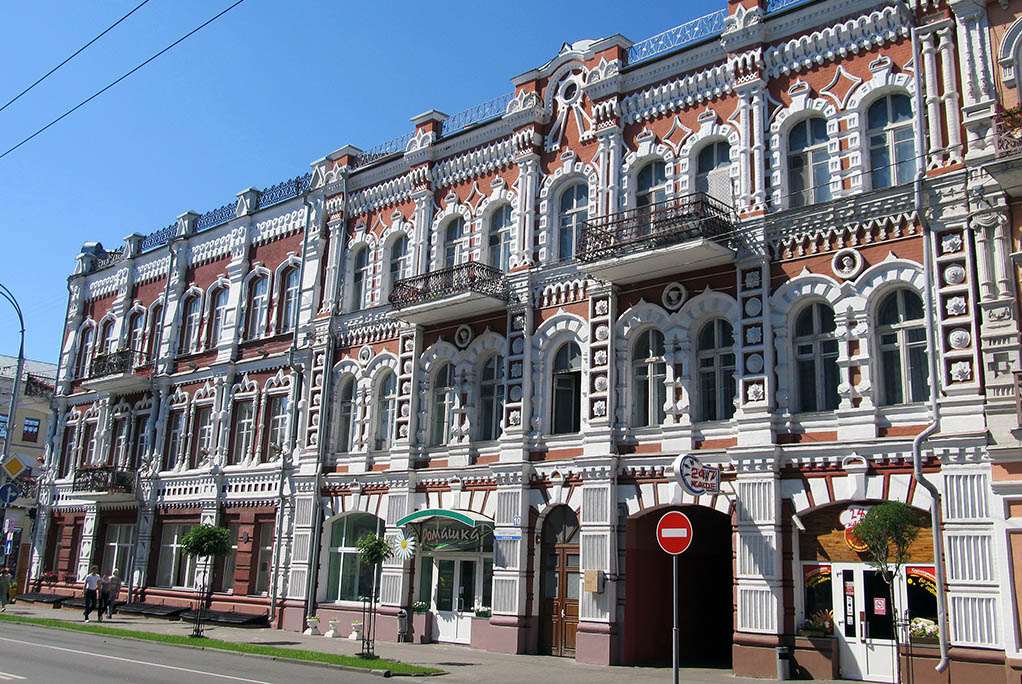
After the revolution, revenue houses were confiscated by the state. The second floor of the house owned by Leyba Mayants became a school. The first floor opened a store selling industrial goods. Miraculously, the building was not damaged during the Great Patriotic War. After the war, the first floor was given to a postal branch, which for a long time served as the main city post office.
Currently, the building of Leyba Mayants' revenue house is in excellent condition, and it houses one of the Gomel branches of "Belpochta." Walking from Gomel's park along Sovetskaya Street, it's impossible to pass by this notable architectural site, which allows you to imagine what the city center above Sozh looked like at the turn of the 19th-20th centuries.