Date :
Thursday, May 30, 2024
The state cultural institution “Zhlobin Museum of History and Local Lore” branch “Krasny Bereg” is the winner of the XXI Republican tourism competition “Discover Belarus - 2023” in the “Museum of the Year” category.
Sub-nomination: “District (city) museums.”
The state cultural institution “Zhlobin Museum of History and Local Lore” branch “Krasny Bereg” is the winner of the XXI Republican tourism competition “Discover Belarus - 2023” in the “Museum of the Year” category. Sub-nomination: “District (city) museums.”
Krasny Bereg invites you to take a trip back to the 19th century. A popular point of the “Golden Ring of Gomel Region” attracts everyone who dreams of immersing in noble life and relaxing in the shade of centuries-old trees.
Krasny Bereg is located 20 km from Zhlobin and 50 km from Bobruisk. You can get there not only by car: several times a day a train passes through the agrotown. And you should definitely overcome this path. An old-world farmstead with amazing interiors, a comfortable park and a unique war memorial - the small settlement is rich with attractions, which can make a powerful impression. Experienced guides of Krasny Bereg branch of Zhlobin Historical and Local Lore Museum will help you uncover all the secrets of the small town.
Farmstead and park complex of Kozell-Poklevskies
Krasny Bereg has been known since the first half of the 16th century. The famous farmstead was founded by military engineer Mikhail Gatovsky, who acquired the settlement in 1877. Later the estate passed to his daughter Maria and son-in-law Vikenty Kozell-Poklevsky. Their main residence was located in the Urals, but the family also paid a lot of attention to their Belarusian possessions. After the October Revolution, an agricultural school was located in the luxurious premises of the farmstead. Since 2015, a branch of Zhlobin Museum of History and Local Lore has been operating in the building. The family coat of arms above the entrance to the palace reminds us of the former owners today.
The two-story manor house was built in 1893 and surprises with its rich decor. Turrets, belts, a mansard roof - the red brick palace is often compared to a fairy-tale castle. The owners wanted to make an impression with a unique appearance of this estate. Therefore, St. Petersburg architect Viktor Shreter proposed elaborate design drawings in which he combined elements of different architectural trends. For example, the gargoyles on the facades migrated from the Gothic era, and one of the halls is decorated in Arabic traditions. In total, more than a dozen styles are combined in the exterior and interior.
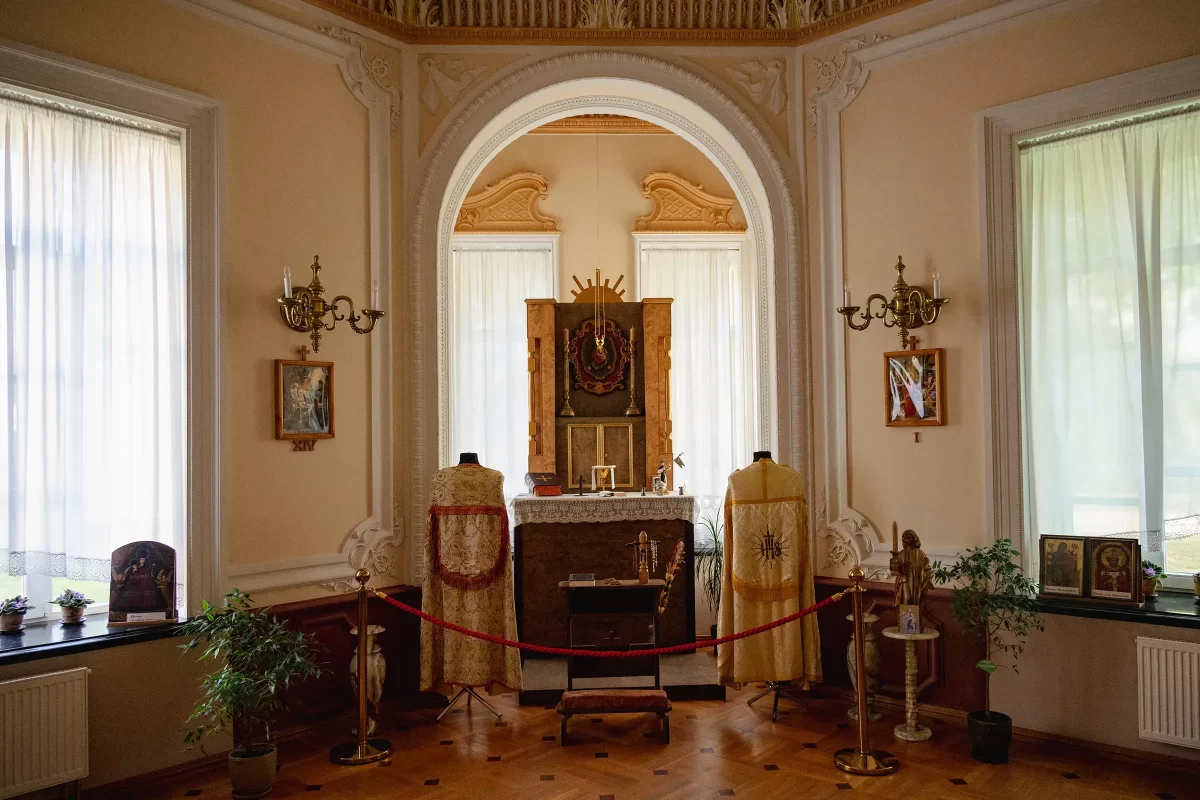
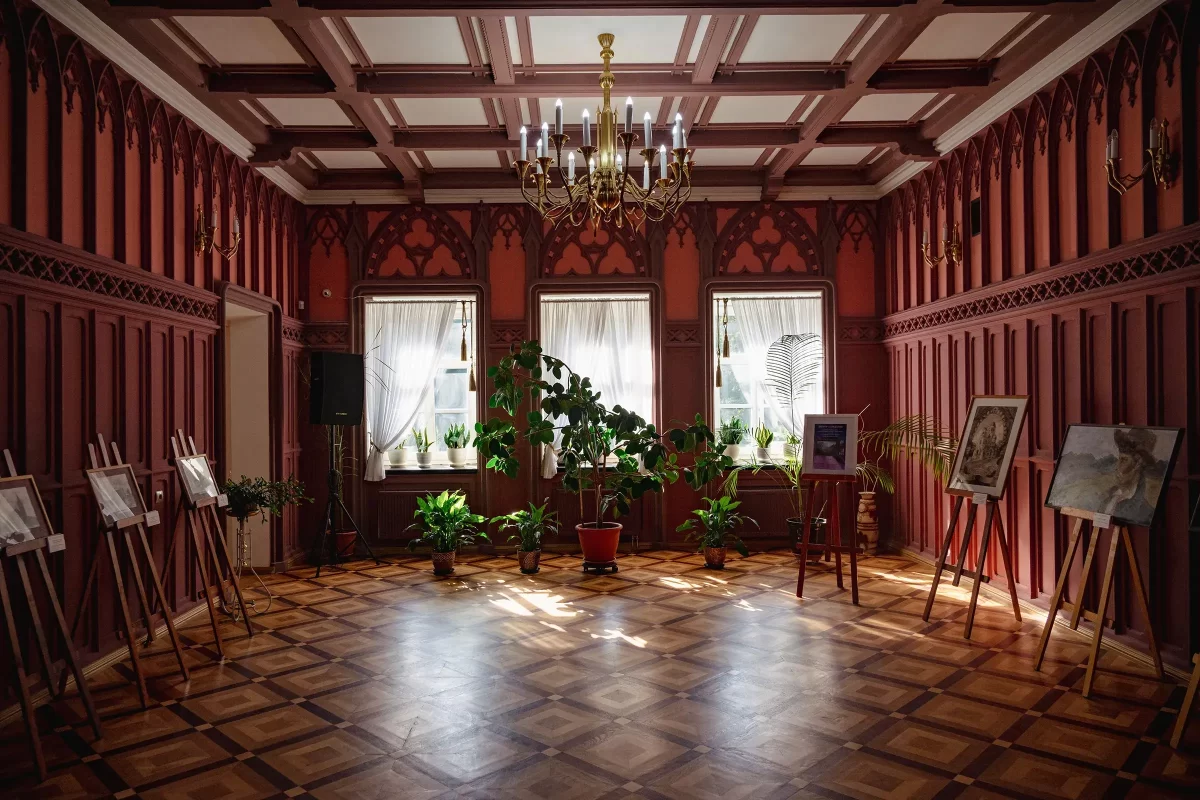
Many of the decorations in the palace are authentic. The original paintings, stucco moldings and carvings have survived to this day. Some of the decoration was restored during a large-scale restoration. Each of the 36 rooms has a special decoration. The interiors are complemented by antique furniture and luxury items. A carefully thought-out exhibition immerses guests in the atmosphere of the 19th century and reveals noble traditions. Every detail - whether this be a tea set, a mantel clock or figurines - bears the imprint of distant times.
In addition to the manor house, the complex includes an out-house, outbuildings, and a former distillery building. The grounds are surrounded by a red brick fence with a majestic neo-Gothic entrance gate.
“English” park
Near the palace there is a picturesque park with the area of five football fields. Frantishek Shanior, one of the most sought-after landscape architects of his time, worked on its design drawings. The master sought to recreate a natural landscape reminiscent of a corner of the wild. The orchard, flower beds, and ponds added to the charm of this place. Today travelers can walk in the shade of centuries-old trees. The spruce, larches, oaks, and chestnuts planted in the 19th century, have been preserved until now. Nearby growing velvety maples, red spruces and firs, exotic for our region. The Dobosna River flows through the green area, along which a winding path stretches. White water lilies adorn the surface of the water. This rare flower is listed in the Red Book.
Monument "Children – Victims of the Great Patriotic War"
A kilometer from the Kozell-Poklevskies, estate there is a monument to children who fell victims of the Great Patriotic War. It is the only one in the entire post-Soviet space. In this place there was a collection point where the Nazis collected boys and girls from the age of 8 to 14 and took from parents and then these children were used as blood donors for wounded Wehrmacht soldiers. According to the historians 1,990 local children were deported to Germany.

What does a monument to dead children look like? Visitors to the complex are greeted by a bronze sculpture of a girl with her arms raised. Behind her was a deserted school classroom with rows of white empty desks. The text of a letter from 15-year-old Katya Susanina is engraved on the board; it was written to her father from captivity. The news did not reach the recipient. She was found dead in 1944. Behind the school board, the “Sun Square” unfolded. It is decorated with a white sailboat - a symbol of hopes and dreams - and improvised easels with colored stained glass windows based on children's drawings.