Date :
Monday, October 30, 2023
Yurovichi is a small agro-town in the Gomel region, located between Mozyr and Khoiniki.
In the second half of the 17th century, Catholic monk Martin Turovsky, traveling through the Belarusian Polesie with a religious enlightenment mission, founded a wooden chapel in Yurovichi. Martin carried with him a miraculous image of the Mother of God. When the monk arrived in Yurovichi, he heard a divine voice from the heavens, which belonged to the Mother of God. The voice asked him to leave the icon on this land, so Turovsky, fulfilling the divine will, built a small chapel in Yurovichi, where he placed the miraculous relic.
The fame of the icon spread throughout the surrounding areas, and people from neighboring towns and villages came to venerate the image of the Mother of God. It is said that the power of the miraculous icon healed severe illnesses and even raised the dead.
In 1680, at the invitation of Martin Turovsky, a mission of Jesuits arrived in Yurovichi. The Order began active work in the village. The monks built a church here and transferred the icon of the Mother of God to it. The wooden church soon burned down, but the miraculous image remained unharmed. The monks then decided to build a new church and monastery in Yurovichi, this time made of stone.
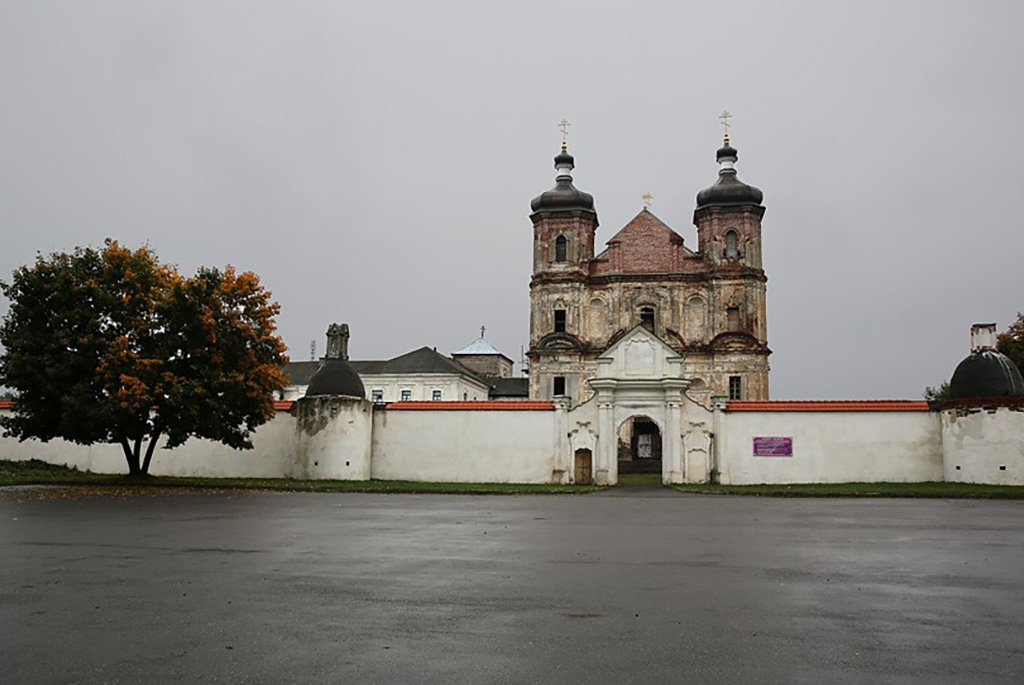
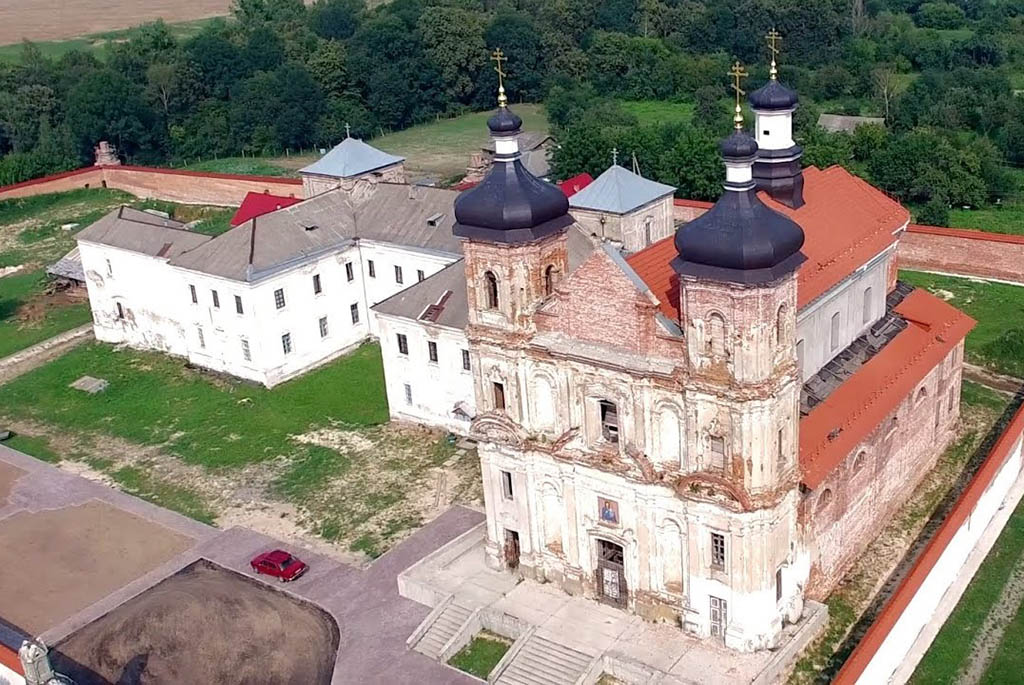
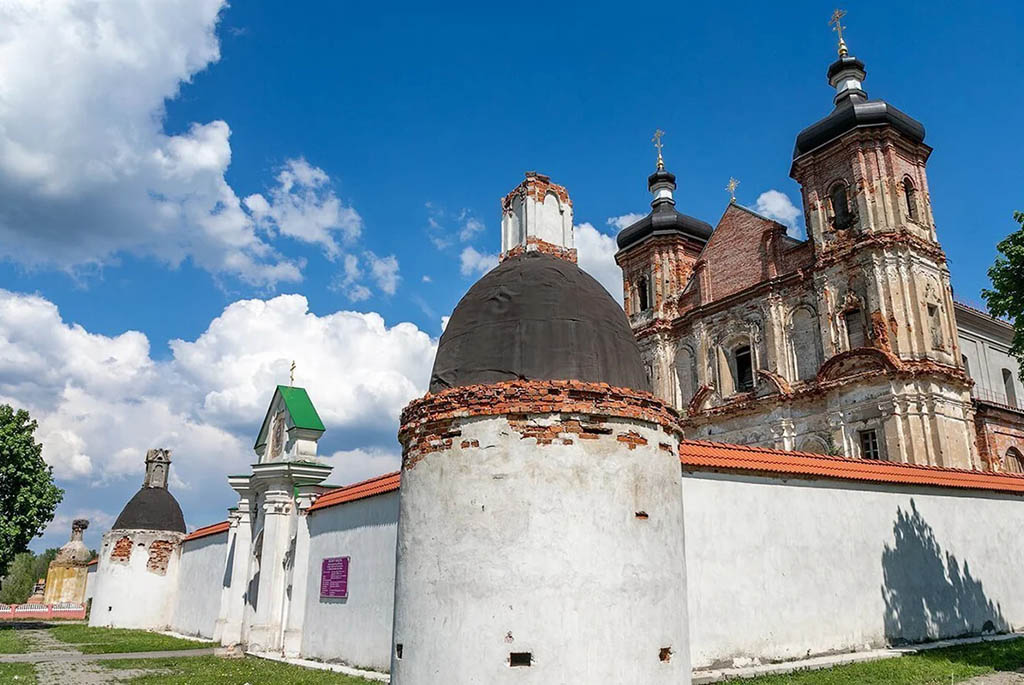
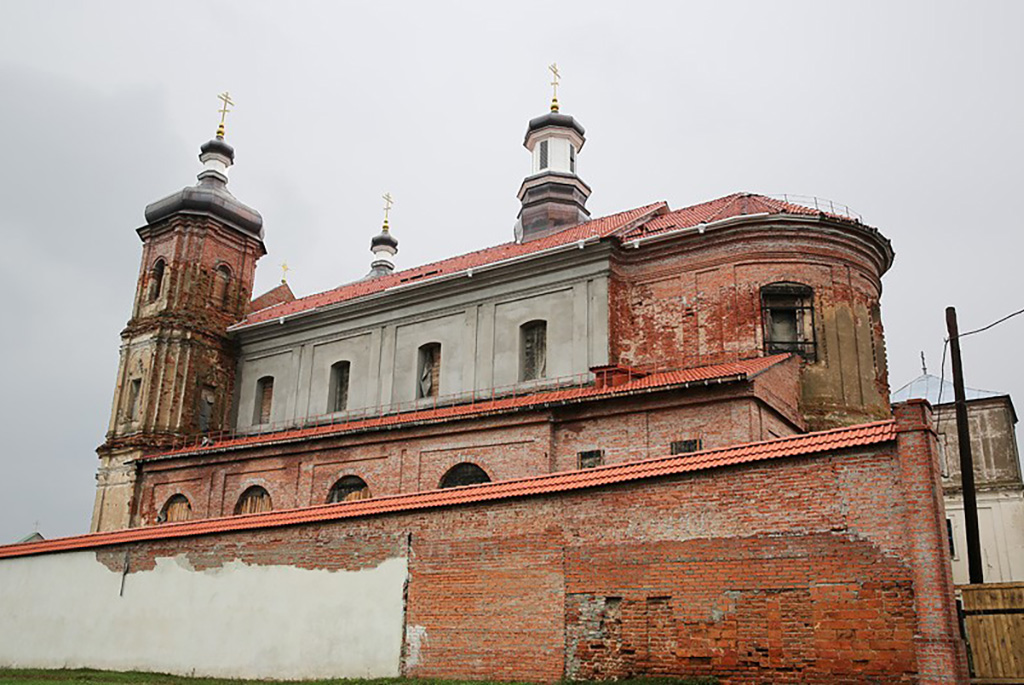
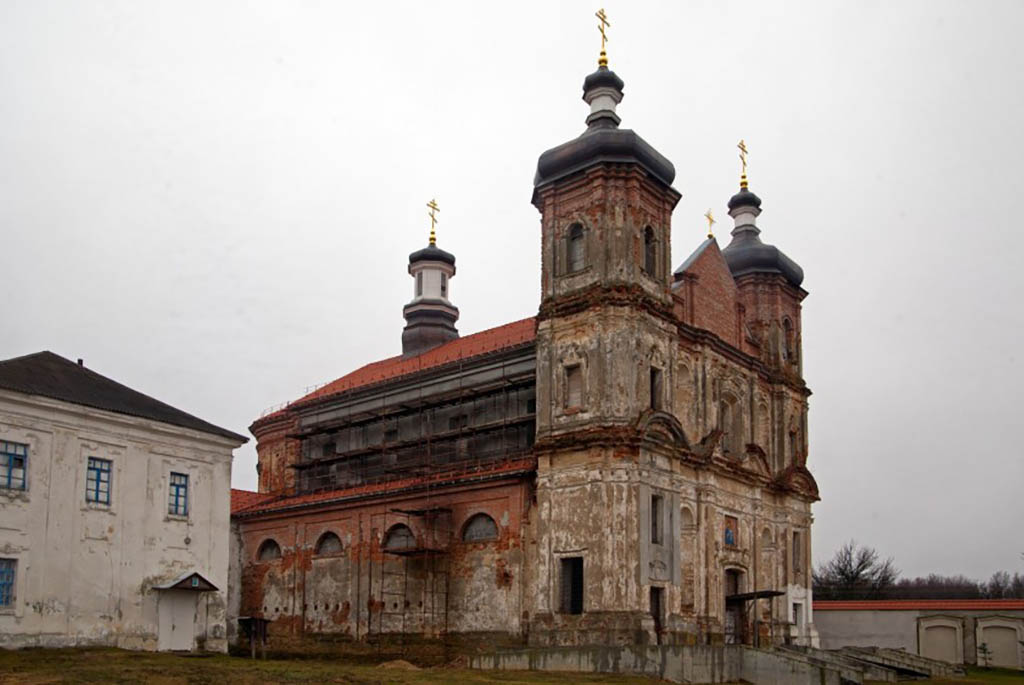
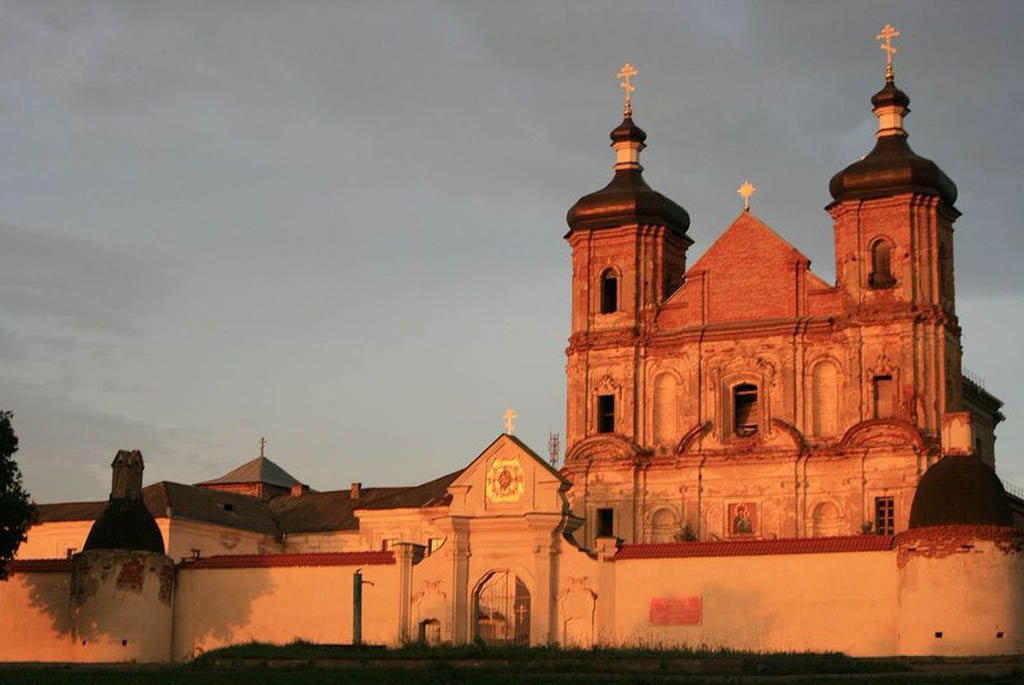
The construction of the monastic complex was completed by the mid-18th century. The structure, in the style of mature Baroque, resembled an impregnable fortress. The monastery was surrounded by a high brick wall, with eight defensive towers positioned around its perimeter. The Yurovichi church was a three-nave basilica with two towers. Bells were placed in one tower, while the other housed a clock that chimed every hour and quarter hour. Within the complex, apart from the church, were living quarters, a library, and utility buildings such as a mill, brewery, stables, icehouse, and bakery. Later, a two-story building of the Jesuit college was constructed on the monastery grounds.
Various monastic orders were the hosts of the Yurovichi monastery until the 1830s - the Bernardines, Jesuits, Dominicans, and Capuchins. The building survived several sieges, an attack by the Cossacks, and artillery bombardment by the Russian army.
After the uprising of the 1830s, the monastery, which then belonged to the Bernardines, was closed by Russian authorities as punishment for supporting the rebels. A local priest, anticipating the closure of the church, replaced the miraculous image of the Mother of God with an exact replica. The original relic was transported to Krakow, where it remains to this day. The icon of the Yurovichi Mother of God can be seen in Krakow's Church of Saint Barbara.
By the end of the 19th century, the church and monastery were handed over to Orthodox believers. The church was reconstructed, and in the Orthodox tradition, domes in the shape of onions were added.
Fate of the Monastery in the 20th Century
At the beginning of the 20th century, with the rise of the Bolsheviks to power, the Yurovichi Monastery was closed. All valuables were taken from the church, and the church's prior was executed. The buildings of the monastic complex survived World War II unscathed. After the war, local residents dismantled part of the walls for the needs of the collective farm. In the early 1950s, the monastery was repurposed as an orphanage.
In the early 1990s, the monastic complex was handed over to the Turov Diocese. Repair work was carried out on the complex's grounds: the roof was refurbished, walls were restored, part of the living quarters were renovated, and heating and sewage systems were installed. Initially, a decision was made to open a women's monastery in Yurovichi in honor of the Nativity of the Blessed Virgin Mary. However, later, in 2005, the monastery was converted into a male one. In 2006, a local resident brought an icon to the diocese, which turned out to be the very replica of the miraculous image of the Mother of God, which had replaced the original icon in the second half of the 19th century.
At present, the monastery's reconstruction is complete, and the monastery welcomes guests and pilgrims. The Yurovichi Monastery architectural ensemble is a prominent landmark and is part of the "Golden Ring of Gomel Region."