Date :
Thursday, October 19, 2023
The Potemkin Palace in Krichev is an elegant architectural structure from the late 18th century, built by order of Prince Grigory Potemkin.
After the first partition of the Polish-Lithuanian Commonwealth, the lands of Krichev became part of the Russian Empire. Empress Catherine II gifted the Krichev elderate to her favorite, Grigory Potemkin, who held a high position in the state and had significant influence on the internal affairs of the country. Prince Potemkin organized production on the gifted territory – he opened factories, established manufacturing, and set up navigation, thereby transforming Krichev from an unremarkable hinterland into a major industrial center.
Potemkin ordered the construction of a palace on his land that would befit his princely status. He wanted the layout of the building to resemble the letter "E" – in honor of the head of state. In this way, the prince wanted to impress the empress, but Catherine herself only stayed in the palace once during a tour of the western provinces.
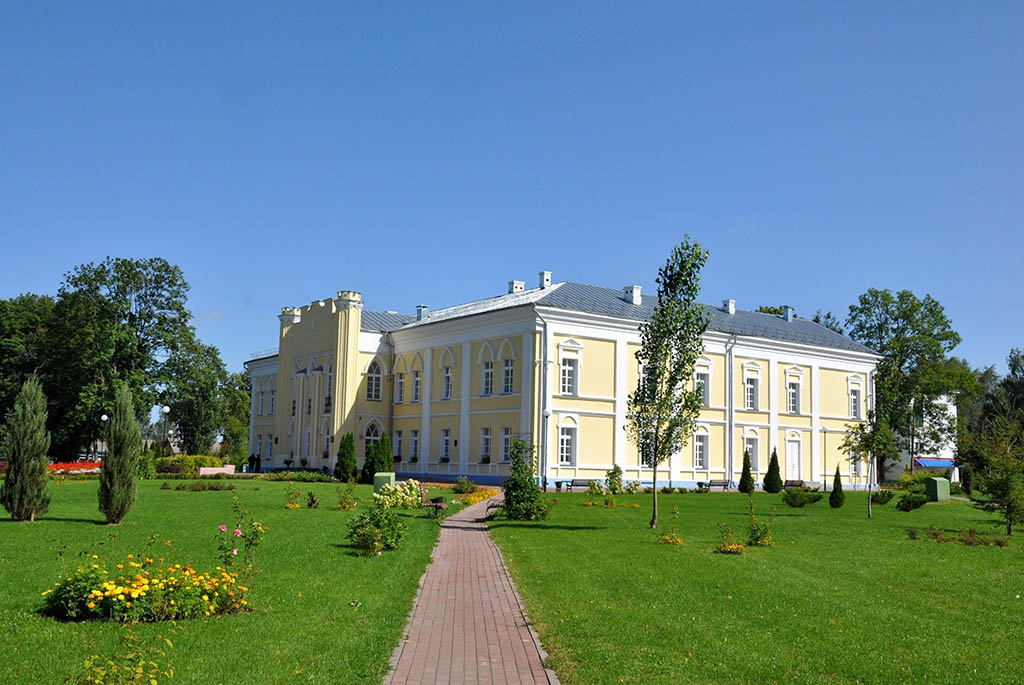
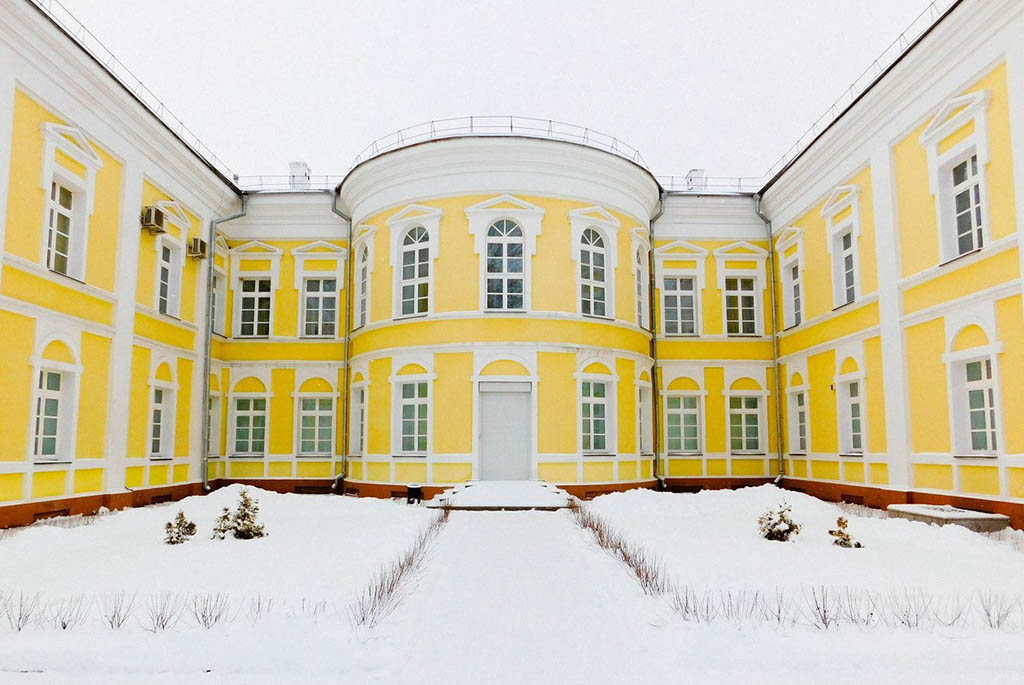
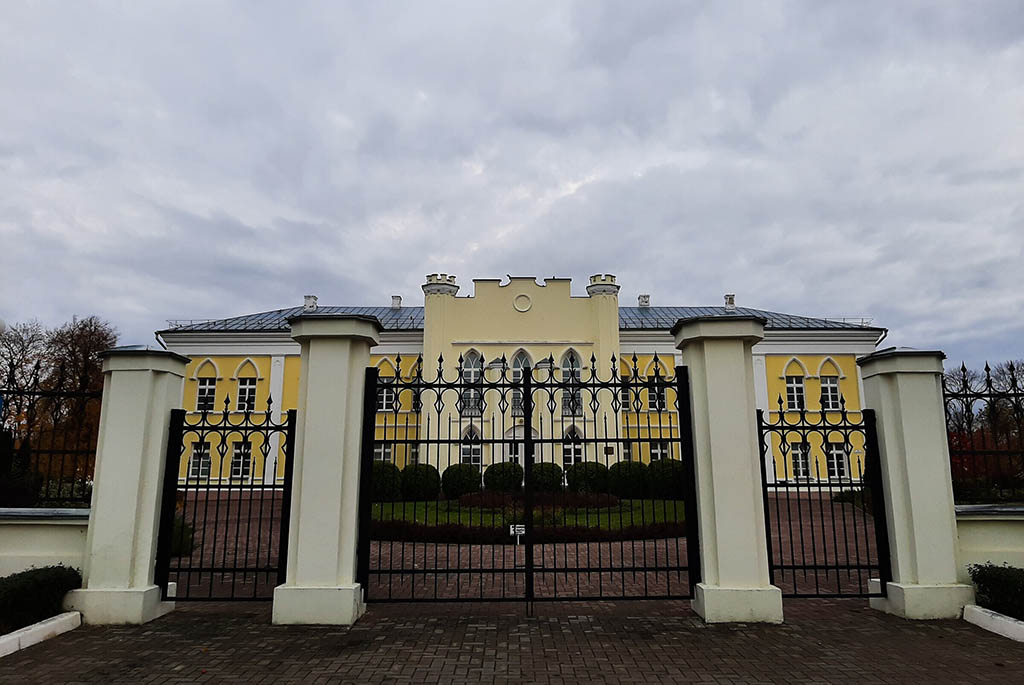
The construction of the residence began in 1778 and continued for almost 10 years. The architect Ivan Starov was the author of the project. According to his design, the palace was erected on an artificial hill, making the two-story structure, to which two side wings were attached, look majestic and monumental. Potemkin's residence had typical features of classicism: symmetry, enfilade layout, characteristic facade decor. The palace was conceived as a place for balls, luxurious receptions, and important meetings. Inside, there were ceremonial halls, a library, a dining room, and living rooms.
In 1787, Prince Potemkin sold the estate to Yan Golynsky. At the beginning of the 19th century, the new owner of the palace, Golynsky's grandson Stefan, decided to update the appearance of the building in accordance with the fashion for Gothic Revival. At his initiative, the classic decor on the window frames was replaced with pointed Gothic elements, and the main entrance was altered, with its corner pylons decorated with crenellations. The entrance to the estate was marked by gates styled like Egyptian pyramids. Further reconstruction of the building was hindered by World War I and the subsequent revolution. After the revolution, the Potemkin Palace suffered the fate of many noble estates of the time – the structure, along with the valuables stored in it, was expropriated in favor of Soviet authorities.
During the Soviet years, educational institutions functioned in the building. In the second half of the 20th century, the palace was abandoned for a long time. In the early 2000s, it was included in the list of historical and cultural values, after which restoration work began in the building.
The Potemkin Palace after Restoration
After the restoration, which was completed in 2008, the former residence of Prince Potemkin opened its doors to visitors. Now within its walls are housed the Civil Registry Office and the Krichev Historical Museum, whose staff conducts tours for everyone.
Visiting the palace, you can easily imagine the life of the noble gentry of the 18th and 19th centuries. Here you can see tableware, tea sets, dishes, a collection of books and paintings, and antique interior items – clocks, candlesticks, mirrors, boxes, and statuettes. Both antique furniture and custom-made pieces were used to recreate the historical setting.
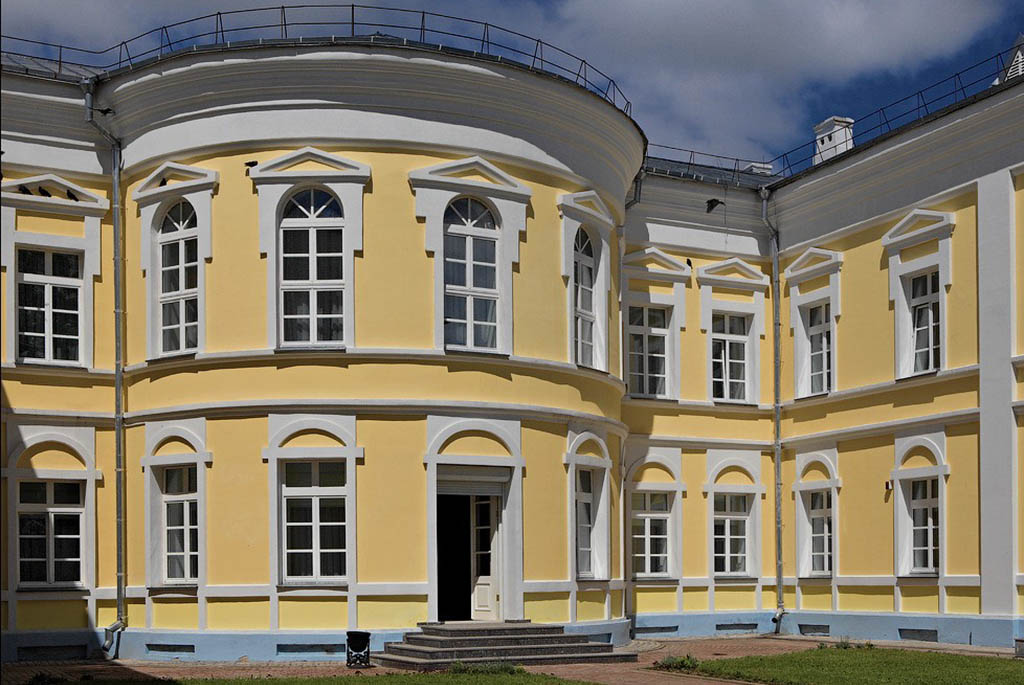

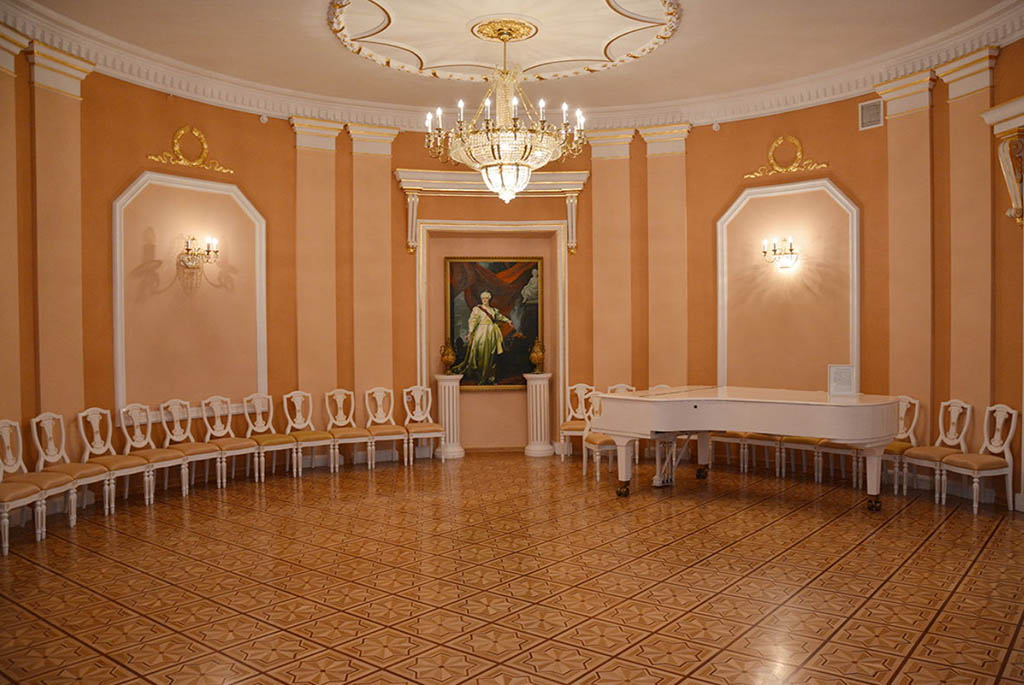
Guides will take you through the luxurious halls, reveal the secrets of Potemkin's relationship with Catherine II, and tell you about how the Empress herself was received in the palace. You will see the dining room, buffet, lady's boudoir, and Prince Potemkin's study.
By visiting the museum, you will learn more about the history of the Krichev region: you will see a model of Krichev Castle, ancient artifacts found in archaeological excavations, elements of medieval pottery, a collection of cold weapons from the time of the Northern War.
While traveling around the Mogilev region, do not miss the opportunity to see Krichev's main attraction. Trains, buses and minibuses run from Minsk to here. The road to Krichev by car will take about 3.5 hours.