Date :
Tuesday, October 31, 2023
The village of Molodovo, lacated in the Ivanovskiy district of the Brest region, was at different times owned by noble gentry families.
In the 18th century, the settlement belonged to the famous composer Michal Kleofas Oginski. Later on, Oginski sold Molodovo to the Skirmunt dynasty, which played a crucial role in the development of the town, transforming it into a cultural and economic hub of the region.
Simon Skirmunt, the Marshal of Brest, made Molodovo his family's residence, which was then inherited by his descendants. The Skirmunt family was quite wealthy and respected in society. Its members were successful entrepreneurs, clergymen, social and political figures.
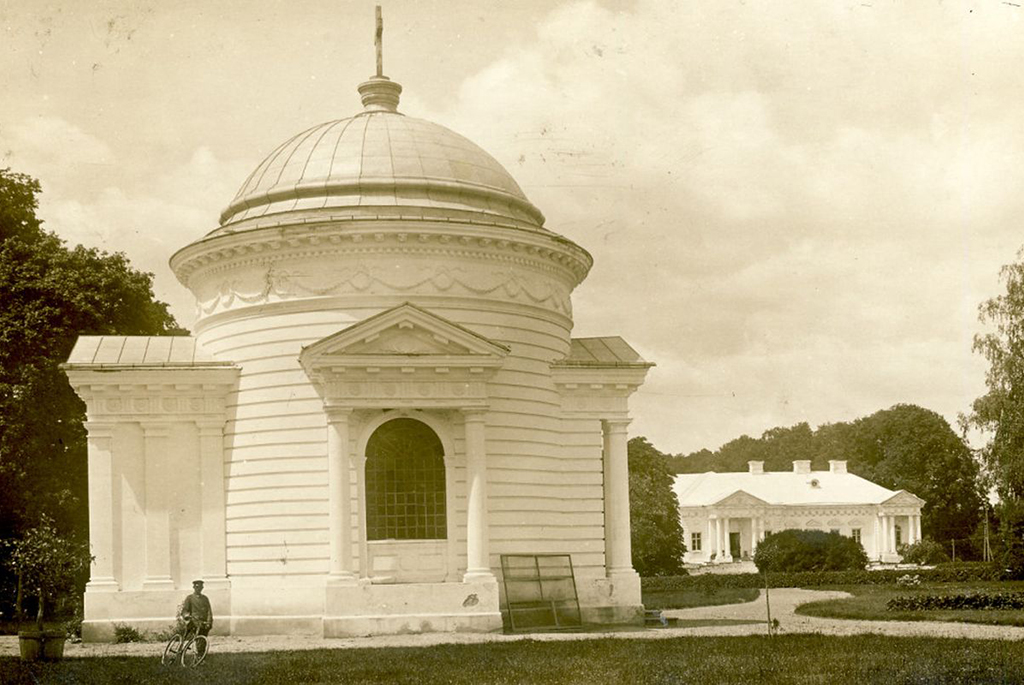
The Skirmunts built a palace-park ensemble in the Empire style in Molodovo, which amazed guests with its beauty and grandeur. The palace's construction was completed in 1798. Its interiors were furnished with luxurious furniture, the walls adorned with elegant tapestries, works by renowned European artists, and portraits of the Skirmunt family members. A picturesque English park with rare plants was laid out around the residence.
Adjacent to the palace, between 1905-1907, a classical-style chapel-rotunda was constructed, which served as the Skirmunt family mausoleum. The design was crafted by the Vilnius architect T. Rostvorovsky. The chapel was a domed structure, adorned with ornate molding and decorative elements. The floor inside was laid with white and red marble, the light walls gave a sense of spaciousness, and the yellow stained-glass windows created an illusion of continuously streaming sunlight. The chapel became a part of the architectural ensemble of Molodovo, which impressed contemporaries with its ornate beauty and perfect form. Famous guests often visited the Skirmunt estate, including the writer Eliza Orzeszkowa.
The serene life of the Skirmunt mansion was disrupted by World War I. The front lines were close to Molodovo, so some of the buildings were destroyed as a result of the hostilities. After the war, the Skirmunt family managed to restore the estate. However, the upheavals of World War II brought new misfortunes. The village was occupied by fascist troops, Roman Skirmunt's family was killed, and the estate was obliterated.
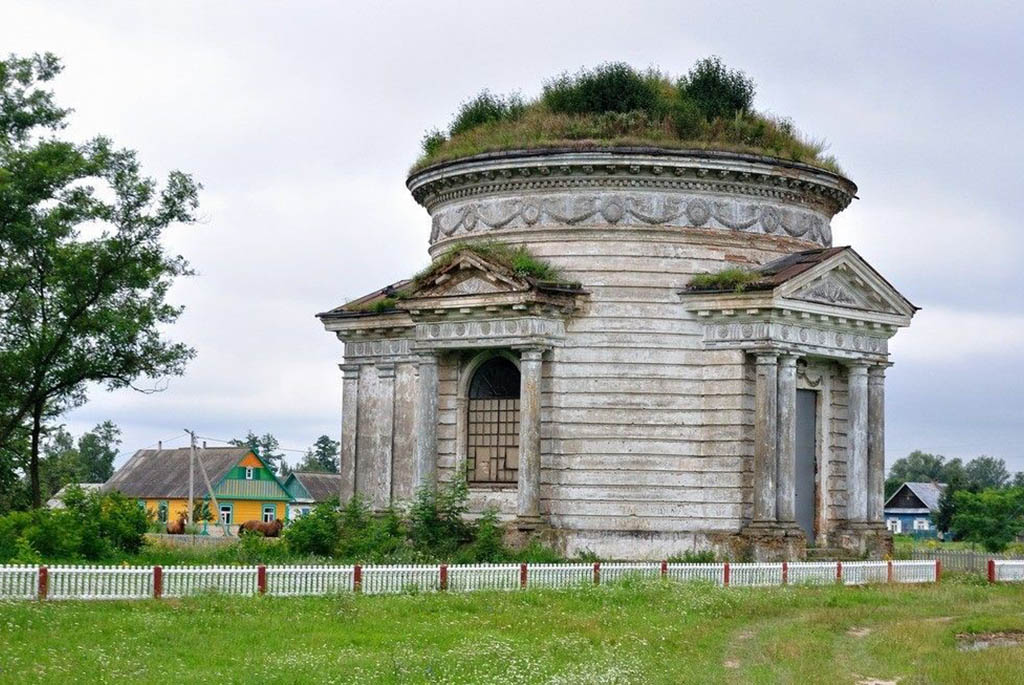
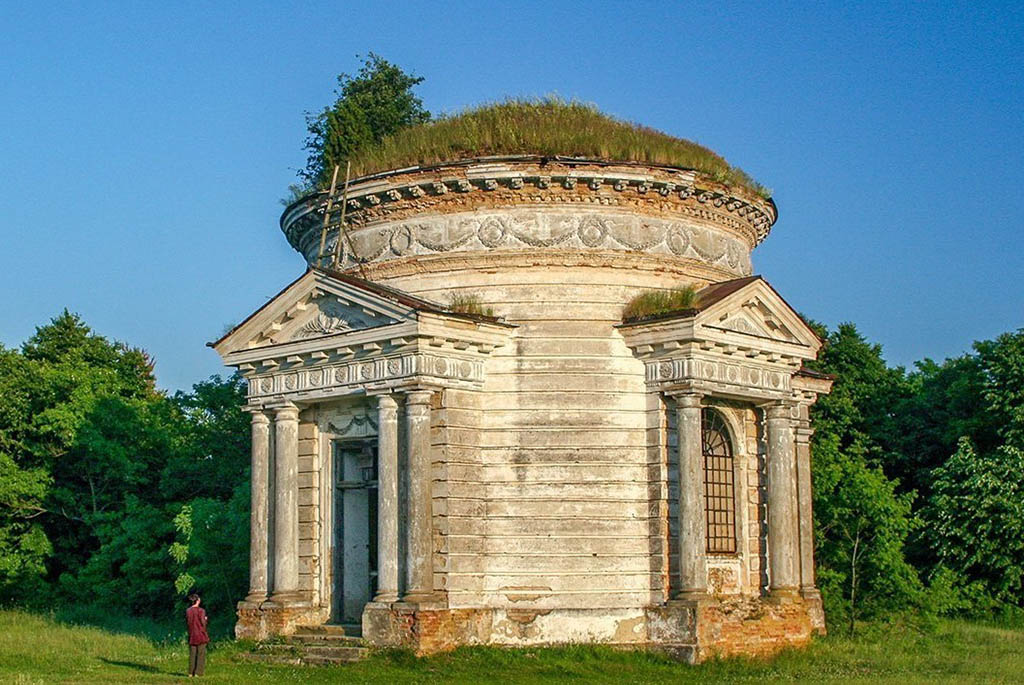
How the Skirmunt palace complex looked can only be deduced from the remaining photographs and the works of Napoleon Orda. The only surviving structure of the complex is the chapel-rotunda. The building has retained much of its exterior decoration and interior elements, with the tiled flooring remaining untouched. In the 1960s, the chapel was desecrated, and the burials within its walls were burnt.
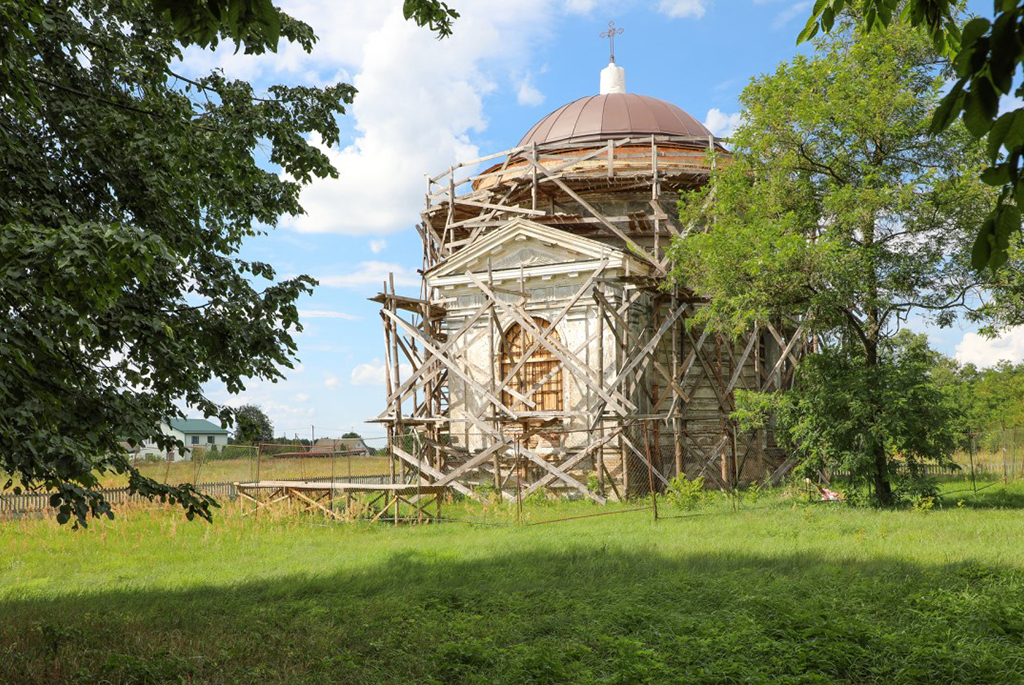
In the early 2000s, the Skirmunt chapel was designated as a historical and cultural value. Restoration of the structure began in 2017. First and foremost, the complex roofing system and the rotunda's dome were restored. Due to a lack of funding, the restoration work has been stretched over years, and the process is still not completed. The restorers' plan is to return the structure to its former beauty and restore the exterior and interior decoration of the Skirmunt chapel.