Date :
Monday, December 22, 2025
The Semezhevo ritual «The Kolyadnye Tsary» is one of the most distinctive and recognizable folk traditions of Belarus. Even today, it exists not as a reconstruction, but as a living tradition. Every year on January 13, during Shchedry Vecher (the Generous Evening), the small village of Semezhevo in the Kopyl District turns into a center of attraction for tourists, ethnographers, and everyone who wants to see authentic folk culture in action.
How This Unusual Ritual Originated
The origins of the Semezhevo «Kolyadnye Tsary» date back to the late 19th century. After the Third Partition of the Polish–Lithuanian Commonwealth, the village of Semezhevo became part of the Russian Empire, and for some time a camp of Russian soldiers was located on its territory. According to memories and oral tradition, it was the soldiers who, during the New Year period, went from house to house congratulating villagers, combining military drill with festive elements.
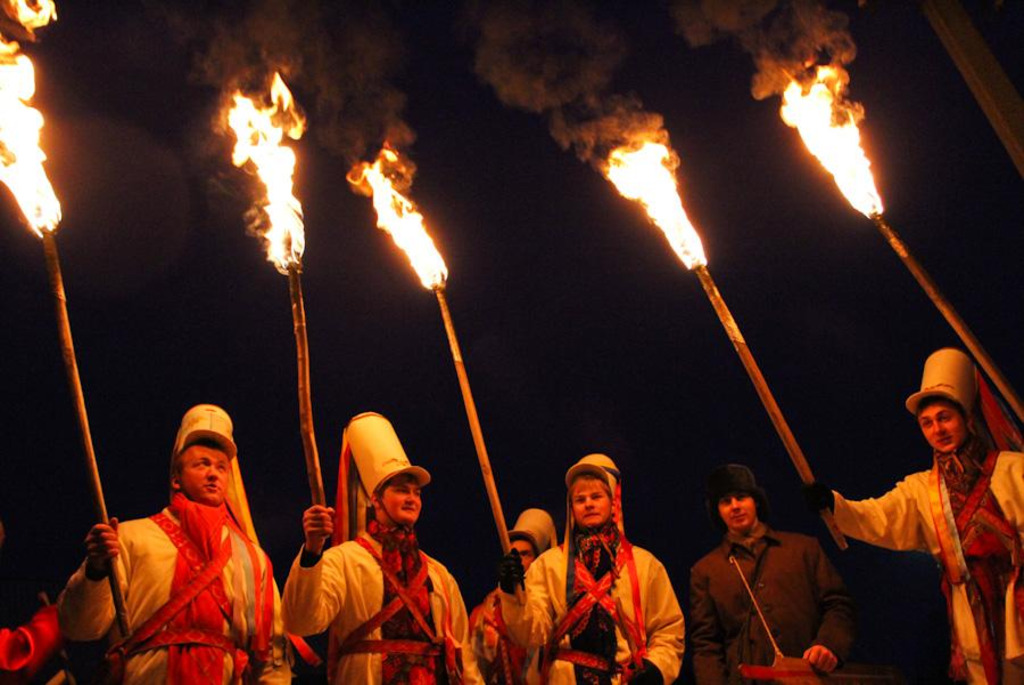
When the military left the area, the tradition unexpectedly took root among the local residents. Over time, it merged with Belarusian Christmas caroling customs and became firmly associated with January 13 – the Old New Year, known in folk tradition as Shchedry Vecher. Thus, a unique ritual emerged in Semezhevo, with no direct analogues in other regions of the country.
Seven Soldiers and Folk Theatre
The main feature of the ritual is its clear structure and recognizable characters. Seven «soldiers» take part in the procession – usually unmarried young men from the village or nearby settlements. Their costumes are carefully thought out: white ceremonial outfits, polished footwear, tall headgear, pectoral crosses, and red belts with traditional Semezhevo ornamentation, tied crosswise.

The procession is accompanied by drum rolls, marching steps, and torches. Alongside the soldiers, other mandatory characters move through the village: the «doctor», the «woman» – a man dressed in women’s clothing, and the «old man» – a woman dressed in men’s clothing. These characters add humor to the performance and turn the ritual into a true example of folk theatre.
«Tsar Maximilian» and the Generous Evening
In every house, the «Kolyadnye Tsary» perform scenes based on the folk drama «Tsar Maximilian». The plot revolves around a meeting, an argument, and a symbolic «battle» between tsars, during which the doctor treats the defeated Tsar Mamai. At the same time, the «woman» and the «old man» act out comic episodes, trying to discreetly take something that is «poorly hidden» – of course, strictly within the bounds of tradition and with a smile.
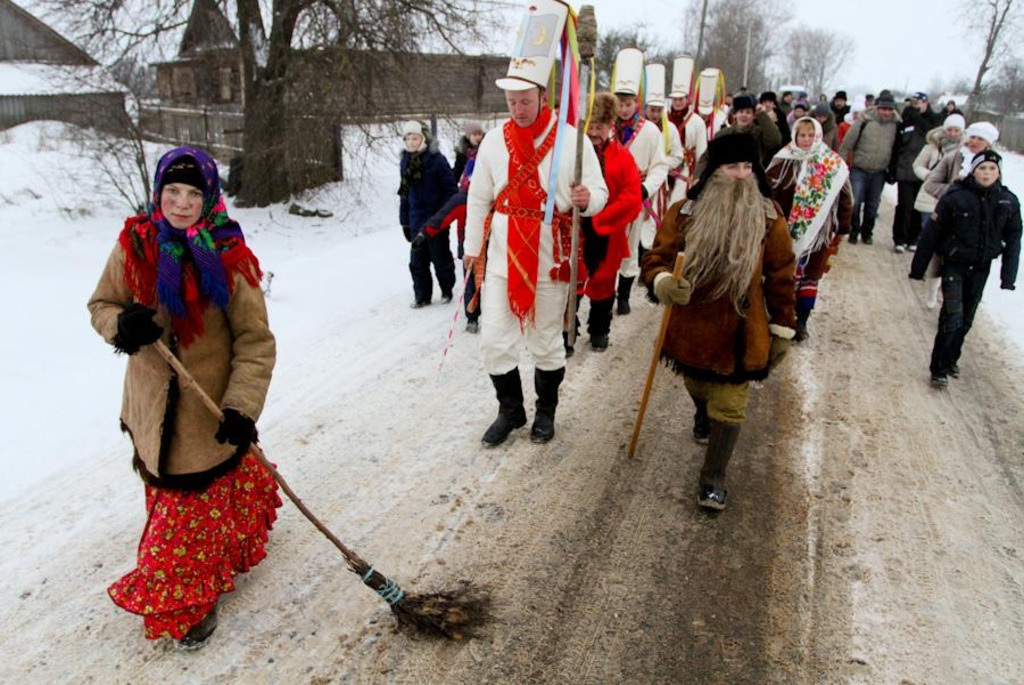
After the performance, the hosts generously treat the participants. Pies, homemade sausage, lard, and other traditional dishes are an essential part of the ritual. It is believed that one should not be stingy on Shchedry Vecher: the more generous the table, the more fortunate the coming year will be.
A Ritual That Lives On Today
«The Kolyadnye Tsary» is not a festival or a tourist show, but a part of the everyday cultural life of the village. In Semezhevo, the tradition is carefully passed down from generation to generation, preserving roles, texts, and the order of actions. At the same time, the ritual is open to guests: tourists can observe the procession, join it, and become witnesses to a rare example of living intangible heritage.
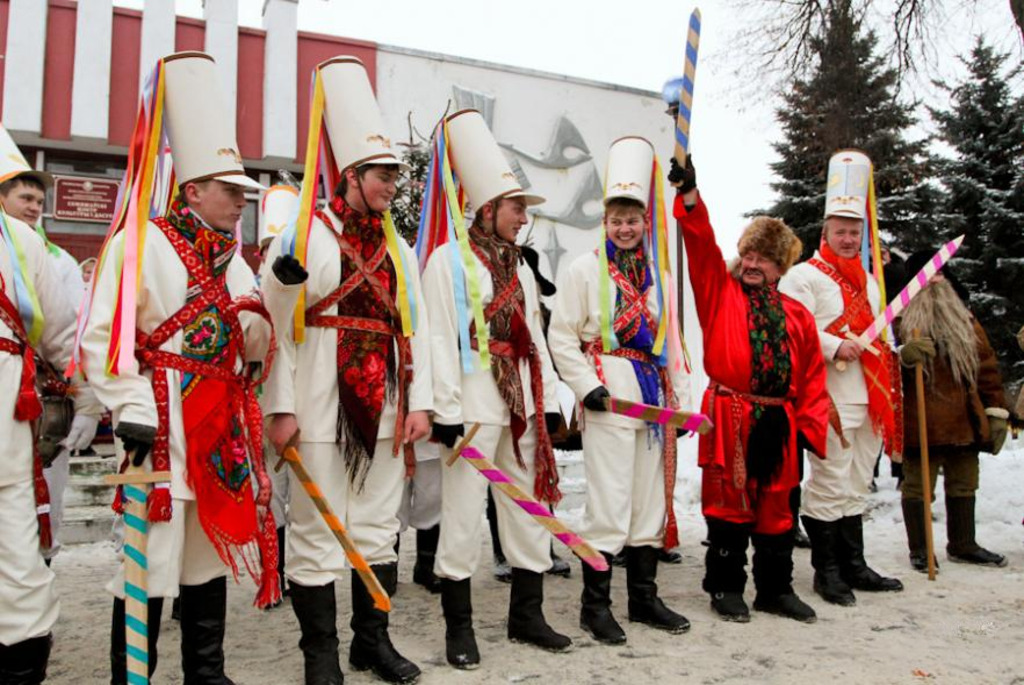
Every year on January 13, excursion groups, folklore researchers, and travelers interested in authentic Belarusian culture come to the village. For one winter evening, Semezhevo turns into a true cultural destination.
Why You Should See the «Kolyadnye Tsary»
The Semezhevo ritual «The Kolyadnye Tsary» offers a rare opportunity to see how a folk tradition continues to live without stage decorations or a formal script. It is an encounter with Belarusian culture in its natural form – with humor, symbolism, collective participation, and sincere celebration.
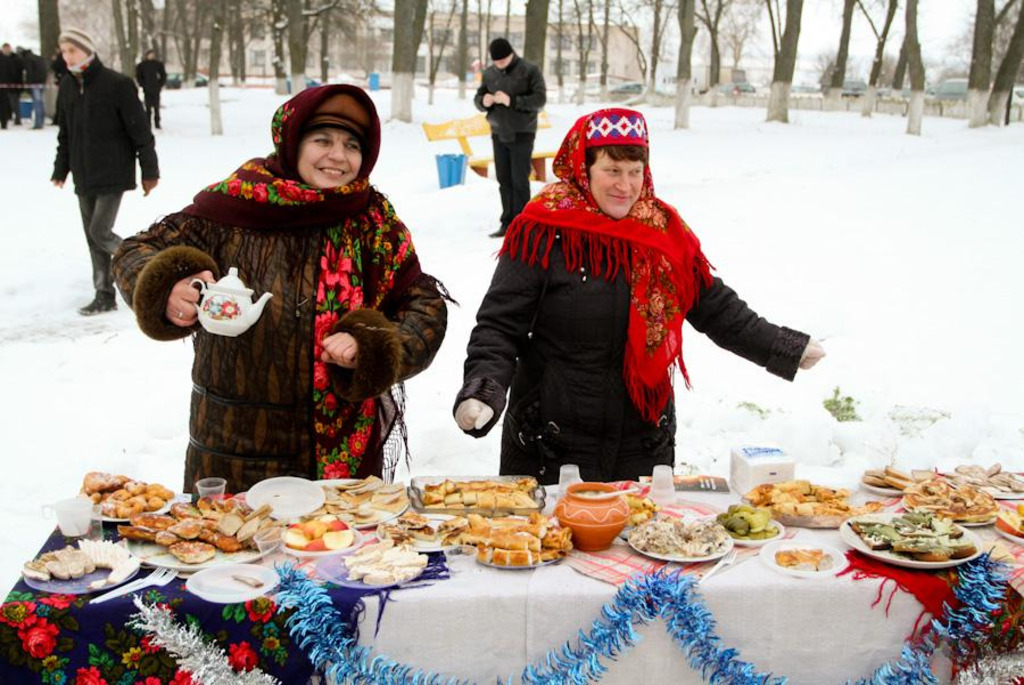
A trip to Semezhevo for the Old New Year is not just an excursion, but an immersive experience into a tradition that remains relevant today, reminding us of the strength of communal memory and living heritage.