Date :
Tuesday, October 15, 2024
October is the month of religious tourism. According to good tradition, we continue to publish interesting selections that will be the beginning of a fascinating journey around Belarus.
This week we will tell you about extraordinary Roman Catholic churches with a rich history, legends and beautiful architecture. Ancient and relatively young temples are valuable not only for believers, but for all of Belarus.
Brest region
Roman Catholic Church of the Holy Trinity
Ishkold village, Baranovichi district
The construction of the Roman Catholic church began in the middle of the 15th century. The temple changed its confession several times – it was both a church and a Calvinist monastery. During the Soviet era, the Roman Catholic church remained active.
Trinity Roman Catholic Church
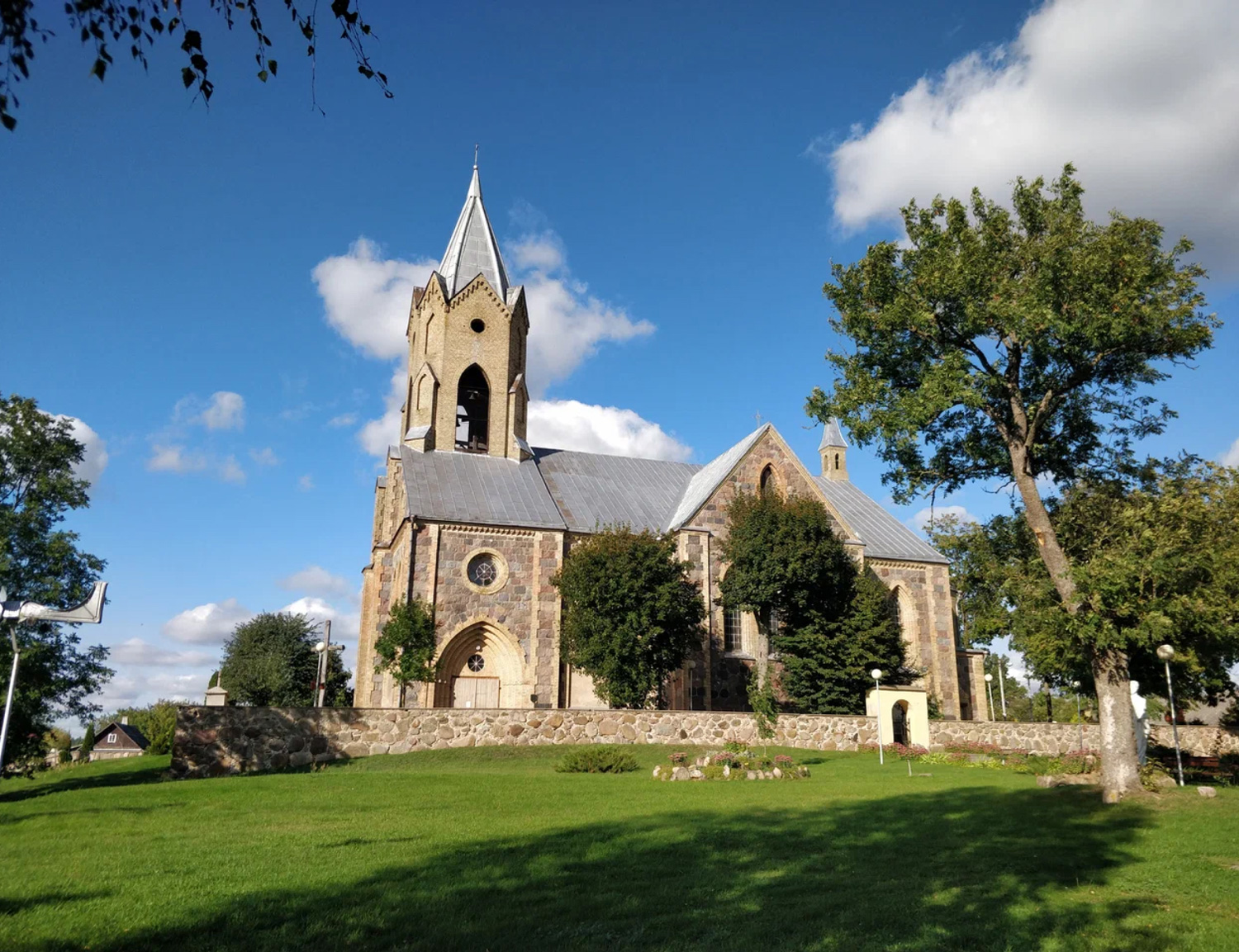
Kossovo, Ivatsevichi district
The wooden Roman Catholic church where Tadeush Kostushko was baptized was built in the 1620s. In the second half of the 19th century, the shrine burned down. A brick church was erected on this site, on the altar of which is an ancient icon of the "Mother of God the Affectionate".
Trinity Roman Catholic Church
Chernavchitsy village, Brest district
The Gothic architectural monument was erected in the second half of the 16th century on the territory of the Radziwill princely family. The wooden sculptures of saints are made in the Baroque style. Today, this functioning church is a monument of national significance.
Roman Catholic Church of the Assumption of the Blessed Virgin Mary
Pinsk
The architectural monument of the 18th century is also called the Franciscan Roman Catholic Church. The temple was destroyed many times and burned more than four times, but was reborn each time. The landmark of the Roman Catholic church is the painting "Pinsk Madonna".
Roman Catholic Church of Saints Peter and Paul
Logishin settlement, Pinsk district
The Roman Catholic church from the early 19th century was built exclusively from red brick. The temple houses one of the most revered Catholic relics – the icon of Our Lady “Queen of Polesie”.
Roman Catholic Church of the Exaltation of the Holy Cross
Brest
The brick cathedral Roman Catholic church was built in the mid-19th century. The current temple is an architectural monument of Brest, where organ music concerts are held. The main relic is Brest Icon of the Mother of God, which was brought from Rome.
Roman Catholic Church of the Assumption of the Virgin Mary
Kobrin
The monument of classicism was erected in the first half of the 19th century. In the post-war period, the Roman Catholic church was closed for 28 years and only in the 90s of the last century it was returned to believers and reconstruction began.
Vitebsk region
Roman Catholic Church of St. Barbara
Vitebsk
A small Roman Catholic church was built in the second half of the 18th century. A hundred years later, the temple was rebuilt, changing the architectural style from baroque to neo-romanticism. In the 1930s, the Roman Catholic church was converted into a warehouse, and then closed altogether. And only at the end of the last century, the temple was reopened to parishioners.
Roman Catholic Church of the Immaculate Conception of the Blessed Virgin Mary and the Franciscan Monastery
Udelo village, Glubokoe district
The complex, consisting of a monastery building, a bell tower and a Roman Catholic church, began to be built at the end of the 18th century. The territory houses two museums dedicated to the patron saint of journalists Maximilian Kolbe and the Franciscan order, as well as a batleika – folk puppet show.
Roman Catholic Church of the Transfiguration of the Lord
Germanovichi village, Sharkovshchina district
The classical Roman Catholic church was built in the late 18th century. Despite its strict and even ascetic appearance, it has a rich interior, which attracts travelers. During the Soviet era, the Roman Catholic church was closed. At the end of the last century, it resumed its activities and was re-consecrated.
Roman Catholic Church of St. Anthony of Padua
Tolochin
The picturesque temple was built on a hill in the middle of the 19th century. The construction work on the Roman Catholic church lasted 40 years. In 1930, the temple was closed and used as a warehouse for a long time, but at the end of the last century, it was returned to the parishioners and restored.
Roman Catholic Church of the Holy Trinity
Rositsa village, Verkhnedvinsk district
The red Roman Catholic church from the beginning of the 20th century is striking in its scale. During the Great Patriotic War, the fascist punitive forces used the church as a sorting point.
Roman Catholic Church of the Blessed Virgin Mary
at. Parafyanovo, Dokshitsy district
An architectural monument of the early 20th century. In some sources it is called St. John the Baptist. The Roman Catholic church with two towers, three naves and an apse, which is complemented by a rare deambulatory, is breathtaking.
Roman Catholic Church of St. Casimir
Lepel
The temple in the classical style was built in the middle of the 19th century on the site of a burnt-down Roman Catholic church built by Lev Sapega. And at the end of the 19th century, the Catholic shrine acquired a 12-voice organ, which was assembled from two brought from other Roman Catholic churches.
Gomel region
Roman Catholic Church and monastery of the Cistercians
Mozyr
On the territory of a mid-17th century monastery, a hundred years after its foundation, a Roman Catholic church and a convent were built. In the second half of the 19th century, first the monastery and then the convent were abolished, and the church was transferred to the Orthodox denomination. During the reconstruction, priceless frescoes were destroyed. And only at the end of the last century did the church become Catholic again.
Roman Catholic Church of the Ascension of the Holy Cross
Svetlogorsk
Over almost four centuries, the temple was built three times, but each time, under the influence of external circumstances, it was destroyed. The current Roman Catholic church is the fourth shrine erected on this site. The Roman Catholic church, built in 1997 from red brick, is located on the bank of the Berezina. It stands out for two architectural elements - high towers.
Roman Catholic Church of the Mother of God
Zhlobin
This young temple on a hill near the Dnieper was built eight years ago. The distinctive feature of the Roman Catholic church is the bell tower, reaching 36 meters in height.
Roman Catholic Church of the Sacred Heart of Christ and Our Lady of Fatima
Lelchitsy
The first wooden temple was built at the beginning of the last century under the charge of Count Joseph Tyshkevich. During the Great Patriotic War, the Roman Catholic church, surrounded by 25-meter poplars, was destroyed. The construction of the new temple was completed in 1998.
Roman Catholic Holy Trinity Church
Rechitsa
The Roman Catholic church was consecrated at the beginning of the 20th century. More than 40 years passed from the development of the construction plan to the final works. The main attraction is the incredibly high bell tower. Despite the strict style, the Roman Catholic church is light and airy inside.
Roman Catholic Church of St. Anthony of Padua
Rogachev
The neo-Gothic red Roman Catholic church was consecrated at the beginning of the 20th century. During the Soviet era, the temple was used as a grain warehouse, a production facility, a fire station, and even a bakery. The Roman Catholic church survived a fire, the Great Patriotic War, and 30 years of desolation. Reconstruction of the temple began in 2003.
Roman Catholic Church of the Nativity of the Blessed Virgin Mary
Gomel
The shrine was built in the second half of the 19th century as an Orthodox church. During the Soviet era, it was partially destroyed and changed as an administration building, then as a film distribution center, and later as art studios. It was only at the end of the last century that the Roman Catholic church was revived.
Grodno region
Roman Catholic Church of St. George
Ossova village, Voronovo district
The neo-Gothic temple was built from rubble stone at the beginning of the 20th century on the site of a wooden Roman Catholic church. The Roman Catholic church has bright interior decoration and a functioning organ.
Roman Catholic Church of Saints Simeon and Thaddeus
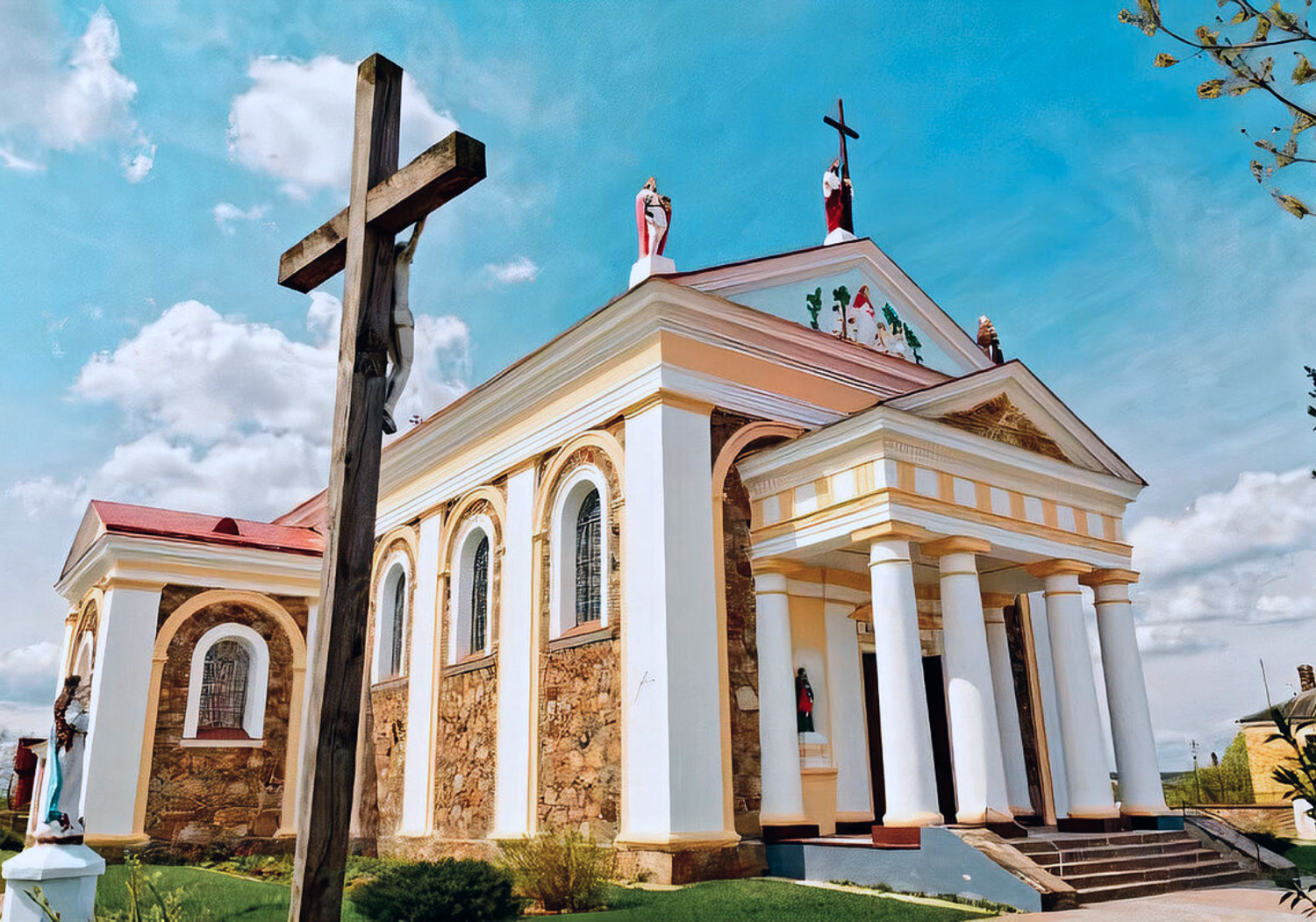
Lazduny village, Ivye district
The Roman Catholic church in pseudo-Romanesque style made of red brick and rubble stone was built at the beginning of the 20th century. The interior of the temple is replete with frescoes and paintings, decorative details and pilasters, as well as carved benches.
Roman Catholic Church of the Holy Guardian Angels
Rogotna village, Dyatlovo district
The pearl of Dyatlovo district appeared in the middle of the 19th century. At first, the temple was an Orthodox monastery, but after a few years, it was transferred to a Catholic parish. During the Soviet era, the shrine was closed and only in the second half of the last century the restored temple became operational again.
Trinity Roman Catholic Church
Zhodishki village, Smorgon district
The temple, which is more than four hundred years old, belonged to the Calvinists for some time. The Roman Catholic church's landmark is the functioning organ from the first half of the 18th century.
Roman Catholic Church of the Assumption of the Virgin Mary
Zheludok settlement
The wooden temple from the end of the 15th century was rebuilt almost four hundred years later. Renovated with rubble stone and brick, the Roman Catholic church belonged to the Carmelites for some time. Under the altar of the temple is the family crypt of the Tyzenhaus.
Roman Catholic Church (Cathedral) of St. Francis Xavier
Grodno
The temple, the construction of which took more than 30 years, was consecrated at the beginning of the 18th century. And half a century later, two symmetrical towers were added to it. In 1990, the Pope granted the Roman Catholic church the status of a minor basilica. The temple has great historical and cultural value for Belarus.
Roman Catholic Church of the Immaculate Conception of the Virgin Mary
Slonim
The majestic snow-white building in the Baroque style was erected in the second half of the 17th century. The powerful walls are practically devoid of decoration. The peculiarity of the temple is the location of the altar towards the street.
Minsk region
Roman Catholic Church of the Heart of Jesus
Ilya village, Vileika district
The temple, built in the neo-Romanesque style, appeared at the beginning of the 20th century. During its existence, the Roman Catholic church was repeatedly reconstructed, but still partially retained its original appearance, being a calling card of Vileika district.
Roman Catholic Church of St. Anne
Dzerzhinsk
The monument of wooden architecture of the late 18th century was repeatedly reconstructed and supplemented with various elements due to frequent fires. Having gone from a warehouse to a music school in Soviet times, at the end of the last century the Roman Catholic church again became an active temple.
Roman Catholic Church of St. Joseph
Rubezhevichi village, Stolbtsy district
The temple of the early 20th century was built under the charge of the then priest Jozef Skakovski. The bell towers reach 45 meters in height, and the foundation of the building goes 6 meters deep. A park of stones was arranged in front of the Roman Catholic church. The stones, and there are about 40 of them, have the names of the villages included in the parish carved on them.
Roman Catholic Church of Our Lady of the Rosary and St. Dominic
Rakov village, Volozhin district
The Gothic temple was built at the beginning of the 20th century. During the Soviet era, the Roman Catholic church, like many other temples, was closed, and reconstruction was carried out in the 90s of the last century.
Roman Catholic Church of the Nativity of the Virgin Mary
Zaslavl
The temple was built in the middle of the 18th century, and a hundred years later it was reconstructed. For some time it was an Orthodox shrine, but then it returned to the bosom of Catholicism. Under the altar there is a tomb of the Pshezdetsky family, through whose efforts the Roman Catholic church was built.
Roman Catholic Church of St. Andrew the Apostle
Naroch, Myadel district
The construction of the red brick shrine was completed at the very beginning of the 20th century. The facade of the building is decorated with four small towers and a rose window. On the main altar of the Roman Catholic church is an icon of the Virgin Mary. The interior decoration amazes with frescoes. The organ, which is more than a hundred years old, creates a special atmosphere.
Corpus Christi Roman Catholic Church
Nesvich
The construction of the Baroque temple under the direction of an Italian architect was completed at the end of the 16th century. Both the outside and the inside walls are decorated with frescoes and paintings – mostly from the mid-18th century. The interior of the temple contains marble altars, bas-reliefs and busts.
Mogilev region
Roman Catholic Church of St. Stanislaus
Mogilev
The temple was built in the middle of the 18th century on the site of a wooden church of the Virgin Mary, destroyed in a fire. During the Soviet era, it was given over to the archives of the BSSR, and some of the priceless frescoes and the organ were damaged or destroyed.
Roman Catholic Church of Saints Peter and Paul
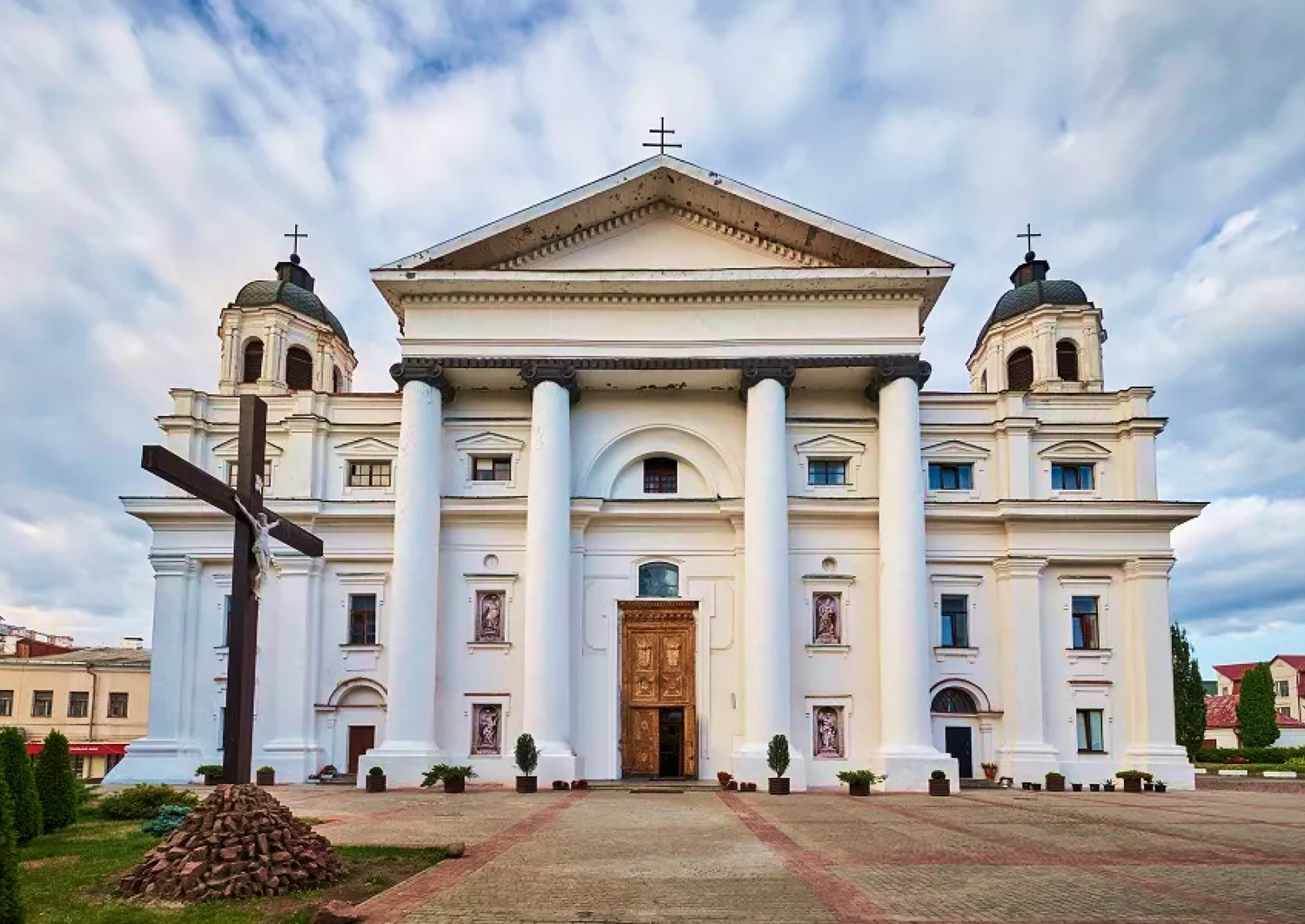
Shklov
Scientists believe that the mid-19th century temple stands on the foundation of a former theater that existed 80 years before the construction of the Roman Catholic church. In the first half of the last century, the shrine was converted into a movie theater. And only at the turn of the new millennium, the Roman Catholic church became operational again.
Carmelite Roman Catholic Church of the Assumption of the Virgin Mary
Mstislavl
The brick building, constructed in the early 17th century, was consecrated as a temple at the Carmelite monastery. A hundred years later, the architect Johann Glaubitz significantly changed the architecture and decor of the shrine. Unique frescoes have been preserved in the majestic architectural monument.
Church of Divine Mercy
Osipovichi
The young church was built at the beginning of the 21st century, on the site of a former parish of the last century. The transformation of a small chapel into a magnificent church took 10 years. The consecration was performed by Metropolitan of Minsk and Mogilev Tadeusz Kondrusiewicz.
Roman Catholic Church of the Virgin Mary
Chausy
The residents of Chausy built the neo-Gothic Roman Catholic church at the beginning of the 20th century. In the middle of the century, the temple was dismantled brick by brick. And half a century later, under the charge of the parish priest, they began to build a new Roman Catholic church, which was consecrated at the beginning of the 21st century. Since 2007, monks of the Order of Piars have served in the parish.
Roman Catholic Church of the Immaculate Conception of the Blessed Virgin Mary
Bobruisk
The unusual facade of the neo-Gothic Roman Catholic church from the early 20th century is an administrative five-story building from the Soviet era. It was added in the second half of the last century, so there are two entrances to the Roman Catholic church.
Roman Catholic Church of the Blessed Virgin Mary
Cherikov
The stone temple in the neo-Romanesque style was built in the second half of the 19th century. The Roman Catholic church had three altars and about 20 icons. During the Soviet era, the Roman Catholic church was used as a cultural center, and later as a cinema. Only five years ago, the temple was returned to the Catholic parish.
Minsk City
Roman Catholic Church of the Exaltation of the Cross
Kalvariyski driveway, 1
The neo-Gothic stone temple was built in the first half of the 19th century. The architectural monument, made of rubble stone, is located on the territory of a cemetery. During Soviet times, the Roman Catholic church was the only functioning Catholic parish.
Roman Catholic Church of the Virgin Mary
Freedom Square, 9
The temple, built in the early 18th century, is the main pearl of the Upper Town. In the niches located in the towers on both sides of the temple are figures of two apostles - Peter and Paul. And the pediment is decorated with a figure of Mary with the baby. During the Great Patriotic War, the temple was damaged, but at the end of the last century, during restoration, it acquired its original appearance.
Roman Catholic Church of St. Roch
Independence Avenue, 44А
The temple of the second half of the 19th century was built on a Catholic cemetery. Several years after its construction, the Roman Catholic church, in addition to its existing name – the Holy Trinity, received a double name – the Assumption of the Blessed Virgin Mary and St. Roch. At the end of the 19th century, it was the only Roman Catholic church where services were held in Russian.
Roman Catholic Church of St. Joseph
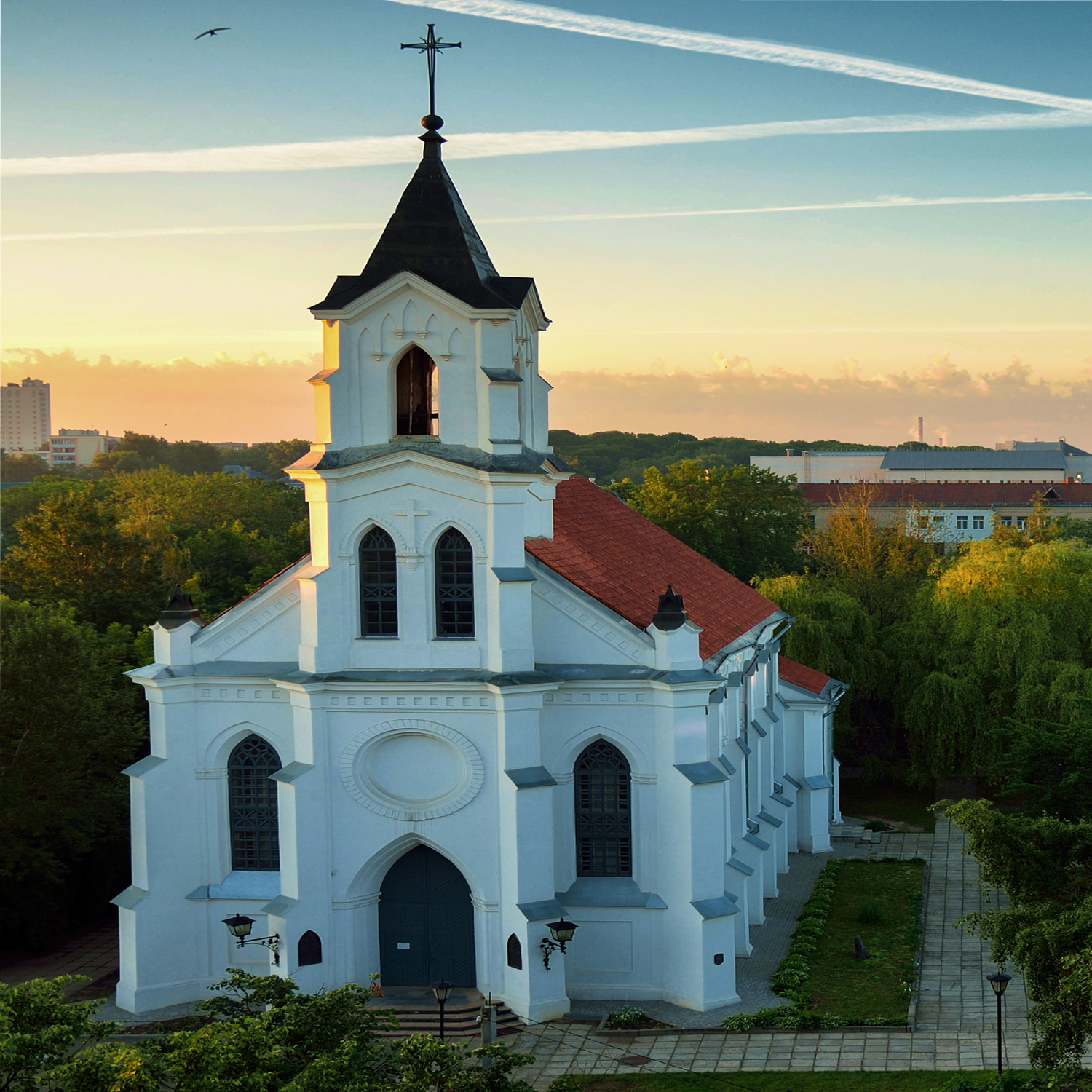
Cyril and Methodius str., 4
In the middle of the 17th century, a church was built on the site of the first burnt monastery, and a monastery was built next to it. The most grandiose reconstruction, during which the Baroque style emerged, took place a hundred years later. Currently, services are not held in the Roman Catholic church.
Roman Catholic Church of St. John the Baptist
Plekhanov str., 24B/1
The construction of the young temple was completed in 2015 with the erection of crosses on the towers of the temple. One of them symbolizes the Lord Jesus, and the second – the Virgin Mary. The Roman Catholic church contains the relics of saints whose names are associated with miracles.